Governor Murphy Restores Jury Service Rights For People Previously Disqualified Because of a Conviction
January 11, 2026, 12:00 pm | in
FOR IMMEDIATE RELEASE
January 11, 2026
Governor Murphy Restores Jury Service Rights For People Previously Disqualified Because of a Conviction
Executive Order Expands Jury Eligibility for More Than 350,000 New Jersey Residents
New Jersey Will Join Other States, Including Red States Like Florida and Ohio, Where Jury Rights Restoration is Already Law
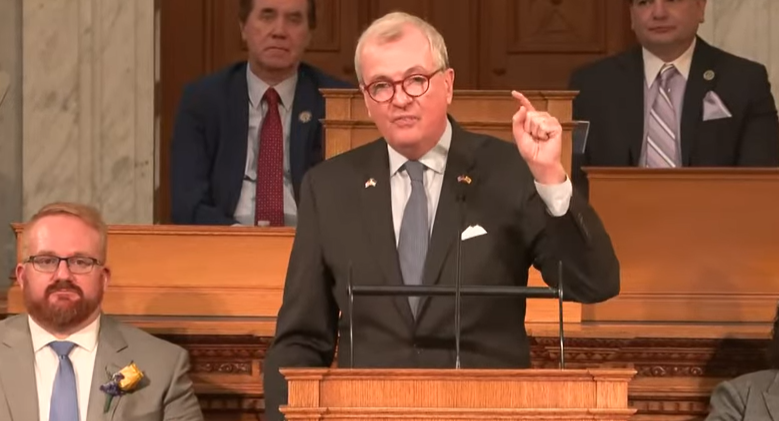
EAST ORANGE – Governor Phil Murphy today signed Executive Order No. 411, making more than 350,000 New Jerseyans eligible for jury service even if they have a criminal conviction that had previously disqualified them.
People in New Jersey have been ineligible for jury service if they have been convicted of an indictable offense under federal law or the law of any state. In Executive Order No. 411, Governor Murphy is invoking his executive clemency powers to restore jury service rights to people who have completed their sentence for a disqualifying conviction under New Jersey state law, as long as they are otherwise eligible to serve.
“Serving on a jury is a defining expression of United States citizenship and, for many, the most significant opportunity—outside of voting—to share in the responsibilities of democratic self-government,” said Governor Murphy. “Restoring the right to serve on a jury builds on our Second Chances Agenda and strengthens our justice system, which has disproportionately impacted Black and Latino communities. Addressing these barriers helps ensure that our juries are more representative of the communities they serve and that our democracy is stronger, fairer, and more inclusive.”
“As a former Administrative Law Judge, I recognize the importance of both fairness and public confidence in our justice system,” said Lt. Governor Tahesha Way. “By broadening participation in jury service, Governor Murphy is strengthening the legitimacy of our courts and affirming the principle that completion of a sentence marks a return to full civic responsibility. This action reflects the true meaning of second chances. I am proud to be part of an Administration that never loses sight of the power of redemption.”
Executive Order No. 411 applies to individuals whose disqualifying conviction occurred on or before January 10, 2026, making them eligible to serve on any jury, including for a criminal or civil trial as well as a grand jury, once they have completed their terms of incarceration, probation, and parole supervision. While individuals covered by this Order will now be eligible for jury service, they still may be excluded from serving in a specific case on a case-by-case basis, including on grounds relating to their criminal record.
Those with disqualifying indictable convictions under federal law or the law of another state remain ineligible to serve on juries in New Jersey, as does anyone with a disqualifying conviction in a case of impeachment or treason. Such cases are beyond the Governor’s clemency powers.
Today’s signing took place at the historic New Hope Baptist Church of East Orange, located in the hometown of the late Lieutenant Governor Sheila Y. Oliver, a champion for social justice. In his remarks before the congregation, Governor Murphy highlighted the story of Dameon Stackhouse, who spent more than a decade in prison for robbery. In the decade since then, Mr. Stackhouse has not only taken accountability for his actions, but has also dedicated himself to giving back to his community. After 22 years without the right to serve on a jury, Mr. Stackhouse will now be able to take part in one of the most important responsibilities of citizenship.
“This Executive Order represents a significant step toward civic restoration, fairness, and inclusion, reaffirming that participation in democracy is a vital part of rehabilitation and community reintegration. By restoring jury eligibility, the State of New Jersey affirms that justice is strengthened when those who have paid their debt to society are given the opportunity to fully participate in civic life,” said Reverend Thurselle Williams, Pastor of New Hope Baptist Church of East Orange. “We are deeply grateful to Governor Murphy for his leadership and for selecting our church as the site for this historic moment. Hosting this signing reflects our ongoing commitment to justice, restoration, and the strengthening of our communities.”
“I am overwhelmed with gratitude for the Governor’s action today as I reflect on having my right to serve on a jury restored after nearly 22 years. Having been incarcerated for 11 years, 11 months, 10 days, and an additional three years on parole, I have long understood the significance of my civic duties like voting and jury service. They are essential to being considered a fully restored citizen,” said Dameon Stackhouse, Justice Fellow at the New Jersey Institute for Social Justice. “This milestone is not just personal; it represents a collective expression of voices from my community – our community – that demand to be heard. This is a pivotal moment for all of us who have faced the stigma of conviction, affirming that our contributions matter and that we are an integral part of the democratic process. Serving on a jury is not only a responsibility; it is a chance to participate actively in shaping the future of our communities, ensuring that justice is served and every perspective is valued.”
“Today’s Executive Order signing marks a meaningful step toward a more just New Jersey for all by restoring the ability for individuals involved in the justice system to perform their fundamental civic duty of serving on a jury,” said Renee Oliver, niece of the late Lieutenant Governor Sheila Y. Oliver and President of the Sheila Y. Oliver Foundation. “This is the kind of progress Sheila Y. Oliver championed throughout her life. She believed deeply in second chances and in uplifting voices too often overlooked. I know that she would be proud to see this work move forward, especially in her beloved community of East Orange.” The Murphy Administration has made New Jersey the State for Second Chances over the past eight years through several initiatives that have been implemented to ensure that individuals involved in the justice system have the opportunity to rebuild their lives. From signing legislation banning the box in housing to restoring voting rights to over 80,000 residents on probation or parole to the creation of a petition process for “clean slate” expungements for certain offenders and more, the Murphy Administration has solidified New Jersey’s standing as one of the nation’s most progressive criminal justice systems.
In June 2024, Governor Murphy signed Executive Order No. 362, establishing the state’s first-ever Clemency Advisory Board to provide recommendations on individual applications for pardons and commutations. Since then, the Board has received over 4,500 applications, resulting in a historic 307 clemency actions – more than any other New Jersey Governor has provided in the past 30 years combined. The Governor will announce additional grants of clemency before the end of his term.
“The right to serve on a jury is a cornerstone of our democracy, and this Executive Order takes an important step toward ensuring our justice system reflects all of the people it serves,” said New Jersey Public Defender Jennifer Sellitti. “Restoring jury eligibility for people impacted by the justice system recognizes their growth and affirms that they are fully part of the communities in which they live. We thank Governor Murphy for his leadership and commitment to second chances. A fair justice system depends on diverse voices, lived experience, and meaningful inclusion, and today’s action moves New Jersey closer to that ideal.”
“Governor Murphy’s Executive Order is grounded in a simple but important belief: our justice system is about fairness, not permanent punishment. When people have served their time, they deserve a full chance to participate in our democracy, including serving on a jury of their peers. Restoring these rights strengthens fairness, representation, and public trust in our courts, and it reflects New Jersey’s commitment to redemption and inclusion, affording New Jerseyans the opportunity to move forward,” said Senator Cory Booker.
“Reintegration comes with rights AND responsibilities and Jury duty is a responsibility of citizens to our justice system,” said Congresswoman Bonnie Watson Coleman. “I applaud the Governor for restoring these rights to over 350,000 of New Jersey’s returning citizens who have paid their debt to Society and who have been denied full citizenship for too long.”
“Many people convicted of a crime go on to lead full, productive lives after serving their time—building careers, raising families, and giving back to their communities,” said Senate Majority Leader M. Teresa Ruiz, Chair of the Legislative Latino Caucus. “The opportunity to serve on a jury should be no different. Restoring this right affirms that redemption is possible in our justice system, and will strengthen our juries by reflecting the full diversity, lived experience, and voices of the people they are meant to serve.”
“Restoring the right to serve on a jury is about recognizing the dignity and humanity of people who have paid their debt and deserve a full voice in our democracy,” said Senator Troy Singleton, Chair of the Legislative Black Caucus. “For too long, our justice system has excluded communities of color from civic participation in ways that deepen mistrust and inequity. This moves us toward a fairer system that values rehabilitation, accountability, and inclusion.”
“Individuals who have experienced our justice system firsthand understand the gravity of a conviction and can bring valuable insight to jury service,” said Senator Angela McKnight. “Restoring their ability to fulfill this essential civic duty will make our courts more reflective of our communities and affirms that a past mistake for which someone has done their time should not amount to lifelong punishment.”
“An ideal jury should reflect all walks of life and be representative of New Jersey’s beautifully diverse population,” said Senator Raj Mukherji. “By barring hundreds of thousands of people from serving on a jury for a prior, remote conviction, we have withheld a key civic obligation from far too many of our residents and ultimately risked making our justice system less fair. This order is a significant stride to extend jury rights and promote due process for all New Jerseyans.”
“When hundreds of thousands of individuals are excluded from jury service, the justice system loses credibility,” said Assemblywoman Shavonda Sumter, Chair of the New Jersey Legislative Black Caucus. “Restoring this opportunity for people who have served their sentences helps ensure our courts better reflect the people they serve and moves us closer to a system that is fair for everyone.”
“Today’s action moves us closer to a justice system that reflects the full diversity of our state and earns the trust of the people it serves. By expanding eligibility for jury service, we are opening the door for more voices, more lived experiences, and more fairness in our courtrooms,” said Assemblywoman Verlina Reynolds-Jackson. “When juries reflect the communities they come from, justice becomes stronger, more credible, and more equitable. This order addresses long-standing gaps in representation and brings us closer to equal justice for all.”
“Restoring eligibility for jury service recognizes that individuals who have fulfilled their debt to society and are working to fully reintegrate deserve the opportunity to participate in all aspects of civic life,” said Assemblywoman Shanique Speight. “This step strengthens our justice system by reinforcing principles of fairness, accountability, and inclusion.”
“We ask people with criminal convictions to reintegrate into society—to work, support their families, and contribute productively. However, barring them from jury service contradicts that goal, undermining the very goal of reintegration,” said Assemblyman Reginald Atkins. “Through this executive order, we are giving these individuals a second chance, all while expanding eligibility for jury service to allow more New Jersey residents, particularly those from historically underrepresented communities, to participate in civic life.”
“Restoring the right to serve on a jury restores dignity, voice, and full participation in our democracy,” said East Orange Mayor Ted R. Green, has long championed pathways to redemption in East Orange, hosting expungement clinics for more than 20 years to help residents restore opportunity, dignity, and full civic participation. “This executive order reflects a simple truth: redemption and civic participation go hand in hand. I commend Governor Murphy for taking this meaningful step and for marking it in a place rooted in faith, justice, and community.”
“Jury service is a fundamental right and responsibility at the heart of our democracy—it protects the fair judgement of those who come before our courts through the perspective of their true peers,” said Newark Mayor Ras J. Baraka. “By allowing residents with past convictions to serve, we affirm that redemption is a transformational reality, that judgment is enhanced by an openness to life's lessons, and that democracy is stronger when more voices are included in our civic process. I am grateful to Governor Murphy for signing this executive order, which enshrines our belief in second chances, and in the role of experience in strengthening our collective pursuit of fairness and justice.”
“We commend Governor Murphy for his courageous leadership in signing this historic executive order ending New Jersey’s lifetime ban on jury service for hundreds of thousands of people with criminal convictions. This victory, championed by our Jury of Us campaign partners, will fortify both our justice system and members of our communities, including my colleagues Dameon Stackhouse and Ron Pierce," said Ryan Haygood, President & CEO of the New Jersey Institute for Social Justice. "Since Governor Murphy took office, we have worked with him to advance historic reforms that strengthen democracy in New Jersey — from restoring voting rights to 83,000 people on probation and parole, to enacting early voting, ending prison-based gerrymandering, and lowering the voting age to 16 for Newark’s school board elections. In this moment of rising authoritarianism, New Jersey is showing the nation what it looks like to champion—not fear—democracy."
“We celebrate the signing of this historic executive order to restore jury service eligibility to hundreds of thousands of New Jerseyans and thank Governor Murphy for his commitment to repairing the harms inflicted by an unjust and racist criminal legal system,” said Amol Sinha, Executive Director of the ACLU of New Jersey. “People deserve second chances, and that includes being able to once again participate fully in civic life. Today’s executive order will help repair some of the harms caused by excluding returning citizens from this vital civic duty, allowing for more representative juries and building a stronger democracy.”
“For eight years, Governor Murphy has been the nation’s leading Governor in implementing much-needed public policy to reform New Jersey’s criminal justice system,” said Reverend Derrick Green. “From sentencing reform and expanded expungement policies to historic clemency decisions, the Independent Prosecutor Act, and this Executive Order, New Jersey is more just and fair than ever before in her history. Governor Murphy’s second chance agenda is a national model.”
For a copy of Executive Order No. 411, please click here.