
Gov. Murphy Sidesteps the Fight to Save Palace Amusement Artifacts
 New Jersey’s outgoing Gov. Phil Murphy recently issued scores of pardons, commuted dozens of sentences, and named top allies to state boards and commissions as he prepares to leave office in January.
His exit activities have now taken a new turn. Rejecting the advice of preservationists in and out of government, the governor has refused to get involved in a crisis endangering thirty-one Asbury Park artifacts, leaving their future very much in doubt.
As first reported by the New Jersey Monitor, Murphy said through a spokesman that he is leaving the handling of the historic artifacts to the New Jersey Department of Environmental Protection. By doing so, responsibility for ensuring proper preservation and eventual reuse of the artifacts will remain with the same agency that for the past twenty-one years has ignored frequent warnings that the artifacts are degrading for lack of competent care.
As of today, the artifacts have been stored, out of public view, for over 7,800 days, with no end in sight.
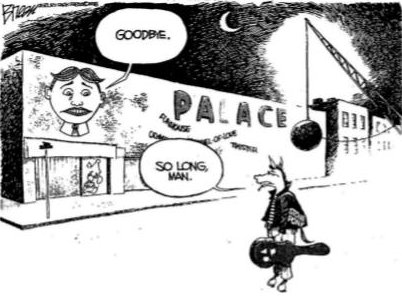
The artifacts are all that remain from Palace Amusements, a 110-year-old waterfront arcade memorialized on the New Jersey and National Registers of Historic Places, and which features prominent in the songbook of Bruce Springsteen. Although required to do so by state officials, local developers who own the artifacts are have failed to return any of the artifacts to public view; preservation treatment, which the state also required, has never been confirmed.
Since mid-September, preservation advocates in and out of state government have repeatedly urged Murphy to intervene in the crisis, hastening the creation of a public display connecting Asbury Park’s history in music and amusements to future generations of residents and tourists.
Senator Vin Gopal, Assemblywoman Margie Donlon, and Assemblywoman Luanne Peterpaul -- Asbury Park’s representatives in the state legislature -- warned Murphy that without his direct involvement, there is a threat that the artifacts “will be lost forever.” They urged Murphy to take “whatever action is necessary” to avoid that result, but to date, their appeal has produced no result.
Kelly Ruffel, executive director of Preservation New Jersey, a leading preservation organization, urged him to order an inspection of the artifacts by a qualified, professional conservator. The results of an independent inspection, coupled with a specific preservation plan, Ruffel said, would help prepare the artifacts for public display.
Prominent New Jersey preservationist Robert Craig told Murphy that it is “shameful” that the preservation and reuse conditions remain unfulfilled. By resolving that situation, Craig said, Murphy would shore up public confidence in DEP by showing that when the department imposed binding conditions, “it will insist upon them, and enforce them."
Craig’s appeal referenced the binding conditions imposed by DEP in 2004 as a precursor to awarding waterfront redevelopment rights to local developers. Department officials required developers to preserve and reuse artifacts after demolition of the Palace. The artifacts include three large wall murals, twenty-five metal channel letters, a wooden cutout depicting an amusements scene, and several small signs.
Save Tillie, an all-volunteer group of preservation advocates, told Murphy that preservation means “to provide competent management and technically appropriate techniques to protect the artifacts from decay, damage, and destruction.” Never once, they said, have local developers “provided evidence on ongoing preservation or treatment.”
Developers Asbury Partners (2004-2009) and its successor organization Madison Marquette (2009 onward), agreed to the conditions, but ever since have kept the artifacts in storage, without confirming preservation measures other than storage. Over the same period, DEP officials have consistently rejected calls for it to enforce the binding conditions.
DEP spokesman Vincent Grassi told the Monitor that the last time DEP staff viewed the artifacts was in 2018, finding them to be in “satisfactory condition.” That contention is at odds with the report by an independent, third-party inspector a year earlier, who found nearly all of the artifacts to be seriously degraded and in loss of artistic integrity.
Grassi told the Monitor that once a hotel or retail development is constructed at the former site of Palace Amusements, the preserved artifacts are required to be incorporated into the new building.” He failed to point out, however, that local developers are avoiding that requirement by using the property as a ground level parking lot.