
Governor Murphy Signs Legislation Protecting Vaccine Access and Affordability in New Jersey
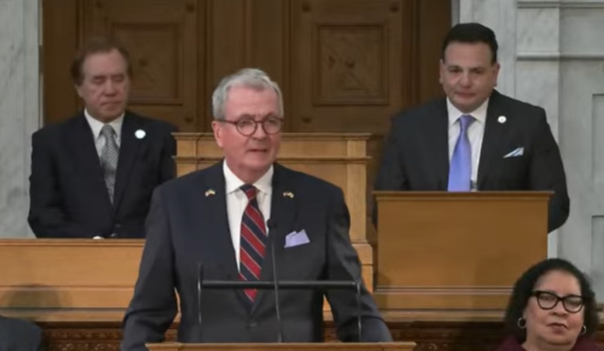
Governor Murphy Signs Legislation Protecting Vaccine Access and Affordability in New Jersey
01/18/2026
Law Ensures Immunization Guidance is State-Base
Legislation Requires Health Insurers and Health Benefit Plans to Provide Coverage for Immunizations Recommended by the Health Department Without Any Cost-Sharing
Health Department Announces Adoption of Updated Communicable Disease Rules
TRENTON – Governor Phil Murphy today signed legislation updating New Jersey’s laws to ensure immunization guidance is state-based and aligning health insurance coverage requirements with that guidance from the New Jersey Department of Health. Concurrently, NJDOH is announcing that a comprehensive update to N.J.A.C. 8:57 will be adopted on Tuesday, January 20, 2026, in the New Jersey Register. Together, these actions will ensure New Jersey’s communicable disease protocols remain grounded in best practices and evidence, while helping keep our families safeguarded against preventable communicable diseases.
Until now, New Jersey laws relied on recommendations by the Advisory Committee on Immunization Practices (ACIP) of the federal Centers for Disease Control and Prevention (CDC) to inform vaccine recommendations. Under S4894/A6166, current statutes specifically referencing ACIP’s recommendations concerning vaccinations and immunizations would be replaced with references to the recommendations of the New Jersey Department of Health (NJDOH).
“This year, we have seen the federal government diverge and waffle on evidence-based recommendations from trusted health professionals – rewriting federal vaccine guidance to the detriment of our communities and putting our most vulnerable residents at risk, particularly our children,” said Governor Murphy. “We take seriously our responsibility to preserve and protect public health, which is why we have mobilized quickly to mitigate the harmful impact of these dangerous policy changes. Today’s bill signing is yet another action by our Administration to provide equitable access to vaccines, achieve community protection, and build sustained trust in vaccinations.”
The law would also require NJDOH to consider the recommendations of the American Academy of Pediatrics (AAP), the American Academy of Family Physicians (AAFP), the American College of Obstetricians and Gynecologists (ACOG), and the American College of Physicians (ACP), as appropriate, in addition to ACIP’s recommendations. This means NJDOH is not required to mirror federal guidance and can instead look to other professional health care bodies to determine state guidance, allowing the State to respond faster, ensure guidance is evidence-based, and make policy decisions that address local public health needs, particularly when federal policy changes may put New Jersey residents at risk.
These measures aim to bolster confidence in vaccinations at a time of increasing public distrust and misinformation. For example, measles cases have soared nationally to the highest levels reported since 1992, which was eight years before the disease was eliminated in the U.S. in 2000.
“At the Department of Health, we are doing everything in our power to protect public health and to keep our vaccination infrastructure safe, effective, and based solely on evidence and science. Everyone is encouraged to stay up to date on vaccines to protect themselves and their loved ones,” said Acting Health Commissioner Jeff Brown. “Over the past year, we have seen that ACIP’s recommendations are not reliably aligned with evidence-based recommendations from trusted health care professionals and risk causing major harm, especially to children. This act will ensure that vaccination policy in our state is guided by the best available science, safeguards children and families, and restores trust in our public health system. I commend the sponsors of this legislation for their tireless advocacy in support of expanding vaccine access and coverage.”
“Under the Murphy Administration, New Jersey has been guided by the principle that health care is a right and not a privilege. This new law builds on the actions undertaken over the last eight years to improve access to health care for our residents. It ensures that health insurers continue to provide coverage for vaccines that are recommended by the New Jersey Department of Health without the barrier of cost-sharing, regardless of actions on the federal level,” said New Jersey Department of Banking and Insurance Commissioner Justin Zimmerman. “This action is critical to providing access to vaccines that will protect the health and well-being of residents in our state over the long-term.”
The bill also requires health insurers and health benefit plans—including Department of Banking and Insurance-regulated plans; NJ FamilyCare, New Jersey’s Medicaid and Children Health Insurance Program; the State Health Benefits Plan; and the School Employees' Health Benefits Plan—to provide coverage for immunizations recommended by NJDOH without any cost-sharing.
Sponsors of S4894/A6166, which takes effect immediately, include Senators Joseph Vitale and Andrew Zwicker, along with Assemblywoman Carol Murphy.
New Jersey families and health care providers rely on consistent, evidence-based vaccine guidance,” said Senator Joseph Vitale. “This legislation ensures our standards remain rooted in medical expertise, even as federal policy becomes less predictable. Recent actions, including the federal move to weaken longstanding Hepatitis B vaccine guidance, show how quickly national recommendations can shift without clear evidence or clinical consensus. New Jersey should not be dependent on abrupt changes that could undermine confidence in immunizations. By empowering the Department of Health to consider the full spectrum of expert recommendations, we are building a more resilient and dependable vaccine policy for our state.”
“New Jersey is acting to ensure that decisions about immunization schedules are informed by scientific consensus and developed by medical experts with the best interests of our residents at heart,” said Senator Andrew Zwicker. “As we see a dramatic rise in vaccine skepticism and changes at the federal level that will result in the widespread contraction of preventable diseases, we are ensuring that families have access to evidence-based vaccine recommendations by our Department of Health and are able to obtain them without major cost barriers.”
“When it comes to childhood immunizations, families deserve clarity and confidence,” said Assemblywoman Carol Murphy, Chair of the Assembly Health Committee. “This bill will ensure New Jersey can rely on trusted, evidence-based guidance from our public health experts so children can continue to receive recommended vaccines without unnecessary barriers.”
Additionally, for the first time in 25 years, NJDOH is adopting on January 20, 2026, updates to New Jersey Administrative Code Title 8 - Health, Chapter 57 – Communicable Diseases (N.J.A.C. 8:57). The updated rule modernizes communicable disease reporting requirements for health care professionals, laboratories, and other mandated reporters; updates standards and procedures for the New Jersey Immunization Information System (NJIIS); and aligns vaccination standards for schools and institutions of higher education with current public health best practices.
The revised rule does not add any new vaccination requirements for school attendance. It ensures that existing vaccine requirements reflect modern standards by linking them to the most current immunization schedules recommended by ACIP or, where appropriate, assess other recognized advisory bodies, including the AAP, ACP, AAFP, and ACOG.
Today’s announcements are part of the Murphy Administration’s broader strategy and ongoing commitment to public health preparedness and affordable health care access.
In August 2025, given federal policy changes and taking lessons from the COVID-19 pandemic response, NJDOH convened an Interagency Vaccine Workgroup to minimize interruptions to vaccine availability and coverage. The workgroup brings together leaders from the Departments of Human Services, Children and Families, Education, Banking and Insurance, Law and Public Safety’s Division of Consumer Affairs, and Treasury to enhance coordination. Collective actions have included issuing orders and directives to ensure access to COVID-19 vaccines for all ages and the birth dose of the hepatitis B vaccine, as well as aligned messaging to the public about the safety and effectiveness of vaccines.
The State has also spoken out against federal misinformation and for evidence-based public health policies through the Northeast Public Health Collaborative and the Governors Public Health Alliance.
Most recently, NJDOH affirmed that New Jersey’s childhood immunization schedule will not change just based on a recent announcement by the federal HHS.
“Thank you to Governor Murphy, Senators Vitale and Zwicker, and Assemblywoman Murphy for their steadfast protection of patients by ensuring continued coverage for life-saving, science-backed vaccines,” said Chrissy Buteas, President and CEO, HealthCare Institute of New Jersey (HINJ). “Vaccines are the safest and most cost-effective ways to keep children and adults healthy and out of hospitals, and New Jersey’s patients, families and our public health system will benefit from their leadership.”
“This legislation is a critical step in protecting New Jersey families by ensuring continued access to lifesaving immunization,” said Dr. Eddy A. Bresnitz, adjunct professor of epidemiology at Rutgers School of Public Health, and former New Jersey deputy commissioner of Health and COVID-19 medical advisor to the Murphy Administration. “By aligning insurance coverage with Department of Health recommendations grounded in the best available science, New Jersey is strengthening public health and safeguarding residents from vaccine-preventable diseases.”
“With public health under attack, these are vital, proactive steps to ensure our residents can obtain the vaccinations they need to protect their health,” said Heather Howard, Professor of the Practice, Princeton School of Public and International Affairs and former Commissioner, NJ Department of Health and Senior Services. “New Jersey continues to lead in providing science-backed guidance and adopting policies to preserve access to lifesaving vaccines and keep kids healthy.”
“NJAHP’s member health plans are committed to maintaining and ensuring affordable access to routine preventive vaccines at no cost to members,” said Wardell Sanders, President, New Jersey Association of Health Plans. “While health plans operate within a framework shaped by federal and state laws, as well as program and customer requirements, their evidence-based approach to immunization coverage remains consistent.”
“We are very supportive of these important changes and look forward to working with the State and health care providers to make sure that people have access to science-based recommendations and these critical life-saving vaccines,” said Linda Schwimmer, President and CEO of the New Jersey Health Care Quality Institute.