
Booker Leads Bipartisan Amicus Brief Challenging Trump’s $1.7 Billion “Anti‑Weaponization Fund” as an Unconstitutional End‑Run Around Congress
| Booker Leads Bipartisan Amicus Brief Challenging Trump’s $1.7 Billion “Anti‑Weaponization Fund” as an Unconstitutional End‑Run Around Congress |
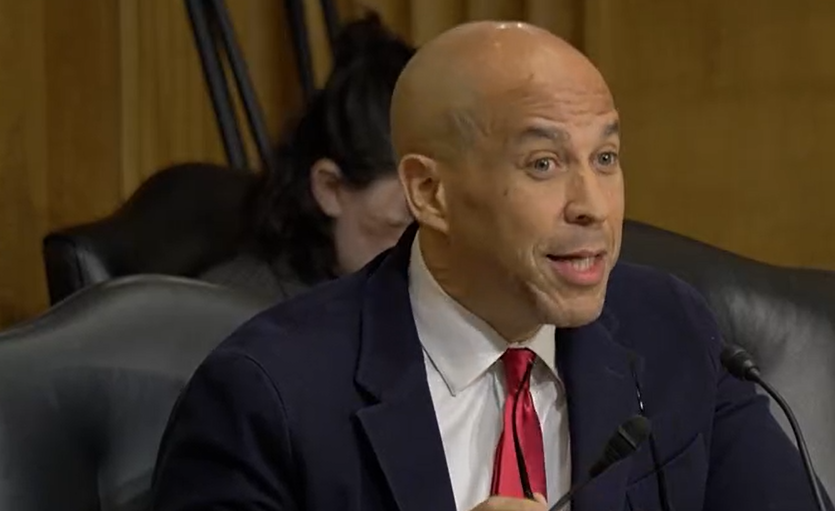
| WASHINGTON, D.C. —Today, U.S. Senator Cory Booker (D‑NJ) submitted a bipartisan amicus brief in the U.S. District Court for the Eastern District of Virginia opposing the Trump Administration’s creation of the so‑called Anti‑Weaponization Fund, a $1.7 billion pool of taxpayer money. The brief argues that the fund is an unconstitutional end‑run around Congress—an unlawful attempt to direct federal dollars, potentially to individuals involved in the January 6 attack, without any congressional authorization.
On January 29, 2026, President Trump filed a $10 billion lawsuit against the Internal Revenue Service (IRS) for the unlawful leak of his tax returns in 2019 by a government contractor who was later convicted and sentenced. The Department of Justice (DOJ) announced a “settlement” that establishes a $1.776 billion “Anti-Weaponization Fund” using taxpayer dollars. If permitted to proceed, this Fund will be used to compensate people who claim they were unfairly targeted by the federal government. People who stormed the U.S. Capitol on January 6, 2021, such as Enrique Tarrio, the former Proud Boys leader, and Jake Lang, who used a bat to attack Capitol Police officers, are already seeking payments from the Fund. In response to overwhelming bipartisan outrage, the DOJ has made ambiguous, out-of-court statements that do nothing to stop the DOJ from moving forward with establishing the Fund after the court order expires. In a recent statement, the President has been unequivocal that he has not “dropped” the Fund. Without a court order or legislation, the Trump Administration can still move forward with this historic act of corruption. The senators’ brief urges the court to stop the DOJ from implementing the unconstitutional Anti-Weaponization Fund. The senators asserted their strong interest in protecting taxpayer funds from abuse and protecting Congress’ exclusive authority over federal spending, appropriations, and appointments. The senators stated that the Executive Branch cannot bypass Congressional authority to create a discretionary fund on its own, especially when the very lawsuit that sparked the settlement was a one-sided suit filed by the President against an agency in his control. While the Department of Justice has publicly stated it will not move forward with the fund, it has not withdrawn the settlement agreement and, absent a court ruling finding the agreement unlawful, it could reverse course at any time. “What is at stake in this litigation,” the senators wrote, “is not an ordinary dispute about executive spending authority or the boundaries of the clemency power. It is a question of whether the machinery of democratic government may be turned, by design and with explicit intent, against the democratic foundations it exists to serve. In the filing, the senators argue that “The establishment of the Anti-Weaponization Fund violates the Spending, Appropriations, and Appointments Clauses of the Constitution. The Fund is also the result of a collusive settlement and therefore ineligible for Judgment Fund monies appropriated by Congress.” They continued: “The Anti-Weaponization Fund presents an immediate and dire threat to our constitutional order and the authority of Congress. Indeed, among other purposes, the Fund is designed to compensate the insurrectionists who stormed the U.S. Capitol on January 6th. The existence of the Fund strikes at the core of Congressional authority and our Constitutional order.” Key Arguments from the Brief: Violations of the Spending and Appropriations Clauses
Violation of the Appointments Clause
The “Settlement” is the Result of a Collusive Lawsuit
Use of Public Money to Benefit January 6 Defendants
Dangerous Precedent for Future Administrations
U.S. Senator Bill Cassidy (R-LA) also joined Booker in submitting the amicus brief. Senators Booker and Cassidy were represented by the Washington Litigation Group, Platkin LLP, and Democracy Defenders Fund in this matter. Read the full text of the amicus brief here. ###
|