
CD-11 Flashpoint: Mejia v. Hathaway
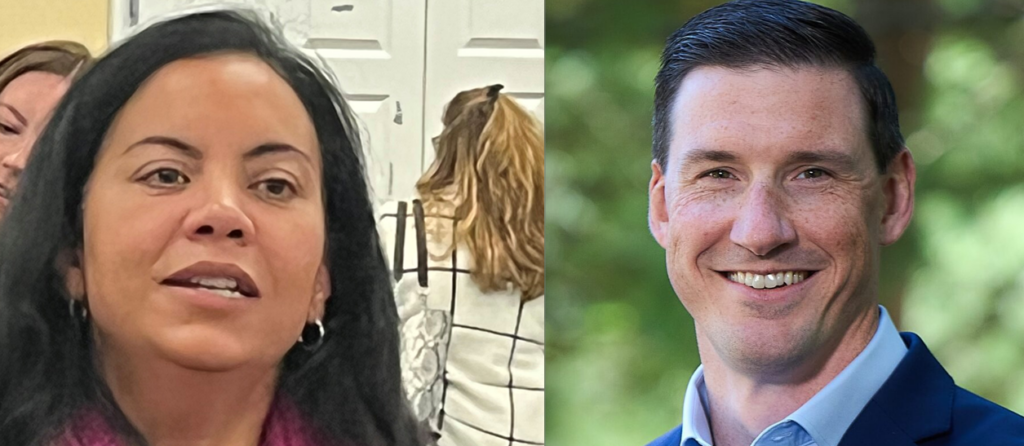
Speaking the other day on News 12 (Power & Politics), Republican Joe Hathaway's take on the upcoming special election in CD-11 was pretty blunt.
He called his opponent, Analilia Mejia, a "radical anti-Semitic socialist" who does not support American values - and one who will "ostracize" the district's Jewish community.
That's quite an overlapping indictment.
After all, one can be anti-Semitic and not be a socialist, or be a socialist and not be anti-Semitic. But, according to Hathaway, Mejia is both. And a "radical" to boot.
Some may see this as merely over-the-top campaign rhetoric by an underdog candidate. The Democratic registration advantage in a district covering parts of Essex, Passaic and Morris counties is about 60,000. The election on April 16 is to replace Mikie Sherrill in the House through the end of the year.
It is natural for rising anti-Semitism and more generally, traditional U.S. support for Israel to be an issue in a race for Congress.
But all that became even more relevant here thanks to the involvement of the American Israel Public Affairs Committee (AIPAC) in the 11-person Democratic primary.
AIPAC spent more than $2 million attacking Tom Malinowski, the perceived frontrunner and a former congressman (albeit from CD-7), for being squishy in his support for Israel. The ad campaign, however, concentrated on ICE, which these days is a far more passionate concern. In the end, Malinowski did lose, but the surprise winner on Feb. 5 was Mejia - probably the most liberal candidate in the field.
And now one that the Republican candidate is calling "anti-Semitic." This was not exactly money well spent by AIPAC.
But it was a warning - and something Democrats realize.
Here is part of a message sent out recently by Morris County Democrats. It asked the question if the general election would be more "normal?"
And it answered this way:
"Maybe, maybe not. Given AIPAC’s involvement in the Democratic primary, Republican candidate Joe Hathaway and the NJ GOP view this as an opening to divide Democratic voters. They’re already trying to make unconditioned support for Israel a litmus test for the race, and they’re working hard to paint Mejia as an extremist, far-left ideologue (she is not, as a Essex County Democratic County committee woman, a former Biden administration official and leader in the democracy building movement in New Jersey she is far from it ). So as you’re starting to get to know Mejia, let’s address this claim directly so we can nip Hathaway’s bad faith accusations in the bud."
That's precisely what Republicans are trying to do - paint Mejia as an extremist.
Not surprisingly, this issue came up the day after the primary when Mejia was asked about anti-Semitism.
She said all types of hate are cut from the same cloth and asked voters to get to know her.
"I know that my Jewish brothers and sisters face rising anti-Semitism in this nation and it puts them and us in danger," she said. "I know this personally."
Mejia added:
"I fight for people's humanity. I believe in the dignity of all people. I uphold the rights of all my brothers and sisters."
As for the larger issue of Israel, the Dems' message goes on to say that Mejia believes in the security of Israel and condemns Hamas. A bit later, it says:
Mejia has supported conditioning U.S. military aid to ensure it is not used in ways that harm civilians. These positions align with progressive Democrats but differ from more conservative pro-Israel stances within the party, leading to debate during the primary. Is Israel a central focus of her campaign? No. While this issue received attention during the primary because of outside spending, Mejia’s campaign is focused on domestic priorities such as health care, protecting democracy, lowering costs for families, and opposing political extremism.
All well and good.
But there are times when campaigns are about things the candidates do not want them to be about.