
Quijano and Kanitra Clash over Patient Protection Bill
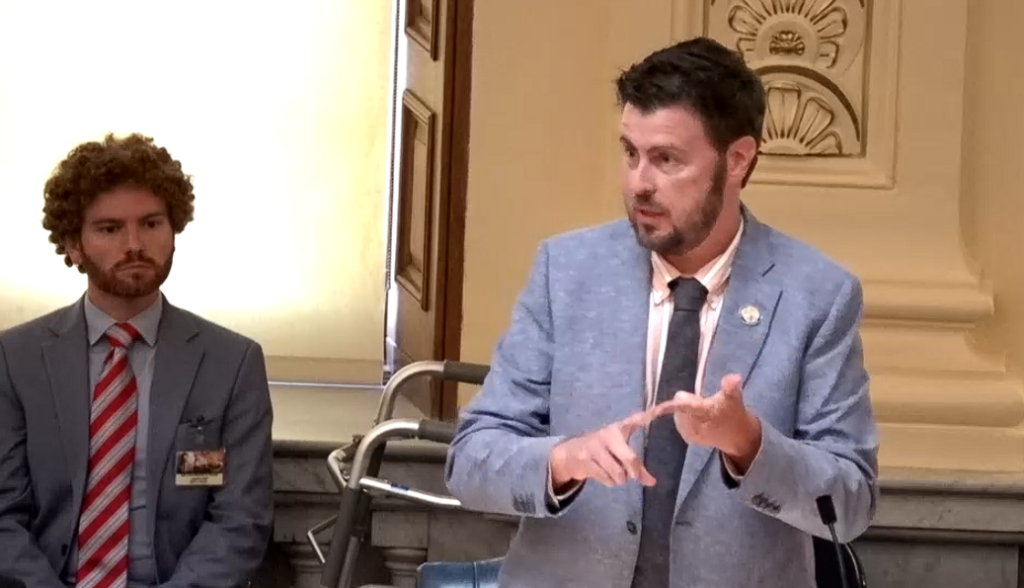
TRENTON - Democrats clashed with Assemblyman Paul Kanitra (R-10) over provisions in A-2260, which secures protections for patients and providers accessing and providing reproductive health care services and establishes the right of residents to reproductive health care activity that is restricted in other states.
The bill ultimately passed on the strength of majority party backing: 55-23-0.
But not before Kanitra made strenuous objections.
"You aren't treating the root cause," said the GOP Assemblyman. "You don't know what trauma they had before. We need to empathize with these kids. Maybe they're dealing with depression and they go to some quack doctor to railroad them into one of these surgeries. That's ruining somebody's life." Surgery, he said, that does not treat the root cause. "Why are we doing this to 12, 13, 14 year old kids?" Kanitra asked, his voice rising. "You should be ashamed."

Assemblywoman Annette Quijano (D-20) pushed back.
"This bill protects the right to make our own healthcare decisions," she said. "Across this country we are witnessing elected officials inserting themselves into exam rooms simply because they disagree with people's healthcare decisions. That is government overreach. This bill protects patients, doctors and healthcare professionals."
Under the provisions of the bill:
Interference with reproductive health care services is a crime of the fourth degree, except that it is a crime of the third degree if the victim suffers bodily injury, and a crime of the second degree if the victim suffers significant bodily injury or serious bodily injury.
The bill also authorizes a civil action against a person who unlawfully interferes with another person’s reproductive health care services. A court may award injunctive relief; compensatory damages; punitive damages; reasonable attorney’s fees and other litigation costs; and any other preliminary and equitable relief the court determines to be appropriate.
The Attorney General may bring a civil action to enjoin a violation of the law, for compensatory damages, and for the assessment of a civil penalty against each person who violates the law. The civil penalty imposed on each actor will be up to, but will not exceed, $10,000 for a first violation, and $25,000 for any subsequent violation.