
Rutgers-Eagleton Poll: What Do New Jerseyans Want Mikie Sherrill to Focus on First? Taxes.
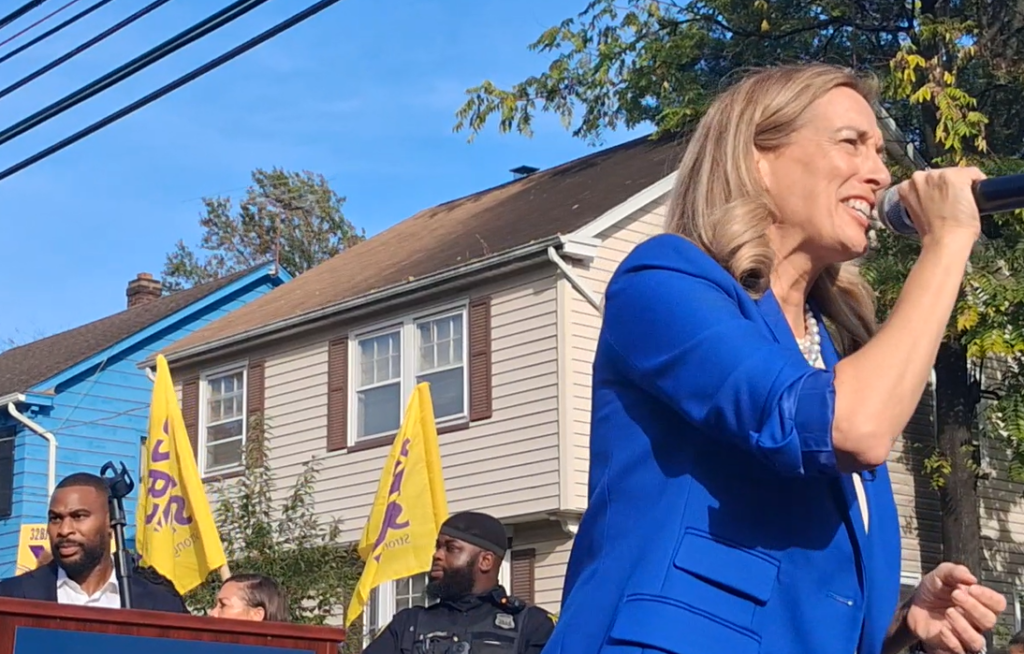
A new governor may be heading to Trenton, but New Jerseyans’ top priority for Mikie Sherrill is a familiar one, according to the latest Rutgers-Eagleton Poll.
Residents think Sherrill should focus first and foremost on taxes, a problem that has taken the top spot for New Jerseyans for 15 years straight.
Twenty-eight percent say Sherrill should tackle taxes, with poll responses heavily dominated by residents specifically mentioning property taxes. Another 19% say Sherrill should focus first on affordability or cost of living in the state, though the umbrella theme of affordability pervaded other topics, too, such as housing and health care.
“While affordability was the all-encompassing buzzword of the 2025 governor’s race, taxes remain New Jerseyans’ No. 1 priority,” said Ashley Koning, an assistant research professor and director of the Eagleton Center for Public Interest Polling at Rutgers University-New Brunswick. “Taxes topped the list at the start of both Gov. Christie’s and Gov. Murphy’s first terms, and they’re still at the top because the problem hasn’t gone away. Taxes have consistently ranked as one of the most important issues for decades, and, much like her predecessors, Sherrill faces a challenge that may prove difficult – if not impossible – to solve.”
Other issues don’t come close. Nine percent say she should focus on utility costs, 7% say housing and housing affordability, 5% say the economy, including inflation and jobs, and 4% say health care and associated costs. Three percent each point to education and government issues, including inefficiency, corruption and spending. Two percent say Sherrill should focus on combating President Donald Trump administration’s agenda and actions and another 2% mention immigration. Twelve percent point to different issues.
“New Jerseyans overwhelmingly want Sherrill to zero in on Jersey-centric, everyday issues that directly affect their lives, many of which fall under the umbrella of affordability,” said Koning. “While anti-Trump sentiment resonated on the campaign trail, governing will require balancing any national-level actions with tangible progress on critical state concerns.”
Sherrill starts her first term with a net favorable rating, with numbers similar to those of other recent New Jersey governors when they first started out.
New Jerseyans are more favorable (40%) than unfavorable (22%) toward Sherrill, 32% have no opinion and 6% say they don’t know who she is. This is a marked difference from October 2025, when, weeks before the gubernatorial election, 42% of voters held a favorable view of Sherrill, and 45% held an unfavorable view. At that time, 11% said they didn’t have an opinion.
“With the heat of the election now cooled, a notable portion of New Jerseyans – and, in fact, the largest we’ve seen since tracking Sherrill’s ratings – are currently undecided about the governor,” Koning said. “This could work in Sherrill’s favor as she begins her first term, suggesting many residents are open to what she brings to the table. But it also poses a challenge: She’ll need to deliver tangible results to turn that uncertainty into positive sentiment.”
Results are from a statewide poll of 1,570 New Jersey adults contacted through the Rutgers-Eagleton/SSRS Garden State Panel from Dec. 29, 2025, to Jan. 6, 2026. The survey has a margin of error of +/- 3.6 percentage points.