
Sherrill Condemns Ciattarelli's Support for Trump's Budget Priorities - Including Prez's Attack on Solar Energy
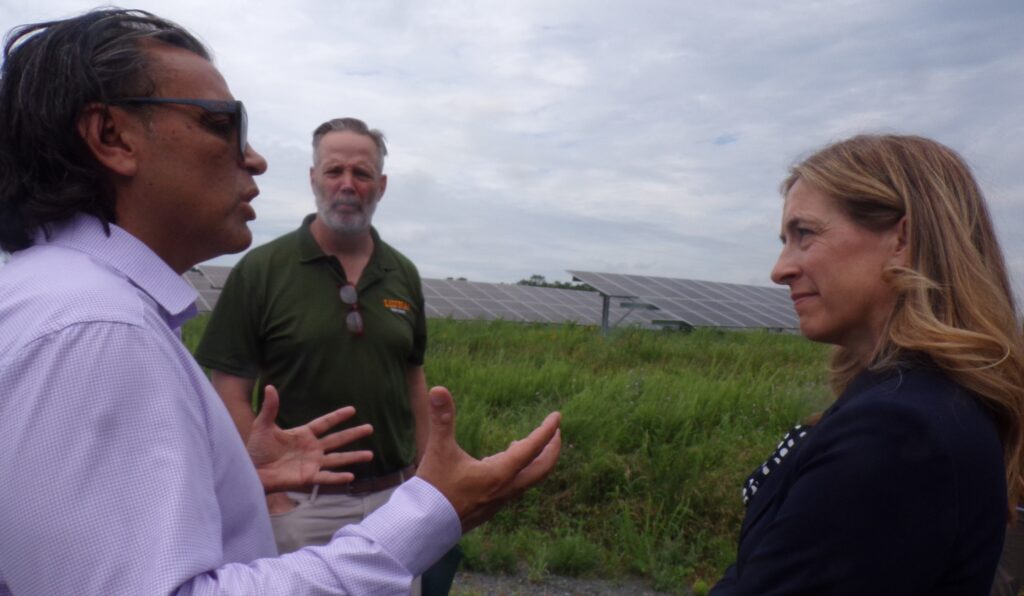
SOUTHAMPTON - U.S. Rep. Mikie Sherrill, the 2025 Democratic nominee for Governor, today traveled throughout her home state, arguing the extensive negative impacts of President Donald J. Trump's budget bill - supported by her rival, Republican nominee Jack Ciattarelli.
Sherrill voted against the bill going into July 4th, when Trump triumphantly signed the document.
Today, the congresswoman started in Camden and ended in Union County, where she respectively highlighted the Trump Budget's deleterious effect on healthcare and education.
In between, she came to Burlington County, where she highlighted how the combination of an executive order issued by Trump on Monday and the passage of his federal budget bill sent a crippling shock wave through New Jersey's solar energy program. Trump's attack on solar energy jeopardizes jobs and the future of the power grid itself in this town, where solar serves two thousand Pine Barrens area customers.
Part of the state's Community Solar Energy Pilot Program, the 10-MWDC BEMS community solar landfill project on the former Big Hill Landfill set the scene for this leg of the Congresswoman's journey. Gary Cicero, CEO of CEP Renewables, joined her, along with Assemblywoman Andrea Katz (D-8), Rob Lewandowski, Communications Director for LIUNA, and CEP General Counsel Steven Gouin.
Sherrill said New Jersey was in the process of making adjustments to the harmful, longer-range impacts of Trump's anti-solar agenda when he issued the order:
"For too long, the Federal Government has forced American taxpayers to subsidize expensive and unreliable energy sources like wind and solar. The proliferation of these projects displaces affordable, reliable, dispatchable domestic energy sources, compromises our electric grid, and denigrates the beauty of our Nation’s natural landscape. Moreover, reliance on so-called 'green' subsidies threatens national security by making the United States dependent on supply chains controlled by foreign adversaries. Ending the massive cost of taxpayer handouts to unreliable energy sources is vital to energy dominance, national security, economic growth, and the fiscal health of the Nation."
Sherrill told solar energy CEO Cicero that she wants to eliminate red tape when she gets to Trenton and streamline government to be more nimble and more responsive. What she doesn't want to do is to stick a knife in solar, and twist it, which is what Trump tried to do last week (with the budget) and this week (with the order), directly imperiling the work of CEP Renewables.
Today, she showed her determination to make it an issue in the governor's contest.
"We just want people to get ahead and drive down [energy] costs," Sherrill told InsiderNJ. "This is just basic American stuff, and the President is attacking our ability to do that. The worst part is Jack Ciattarelli is in lockstep with the President. He cares more about Donald Trump's opinion than serving the people of New Jersey."
"Ideology is driving the policy," said Cicero. "The worst thing is there might be blackouts and prices going up. It's very disappointing."
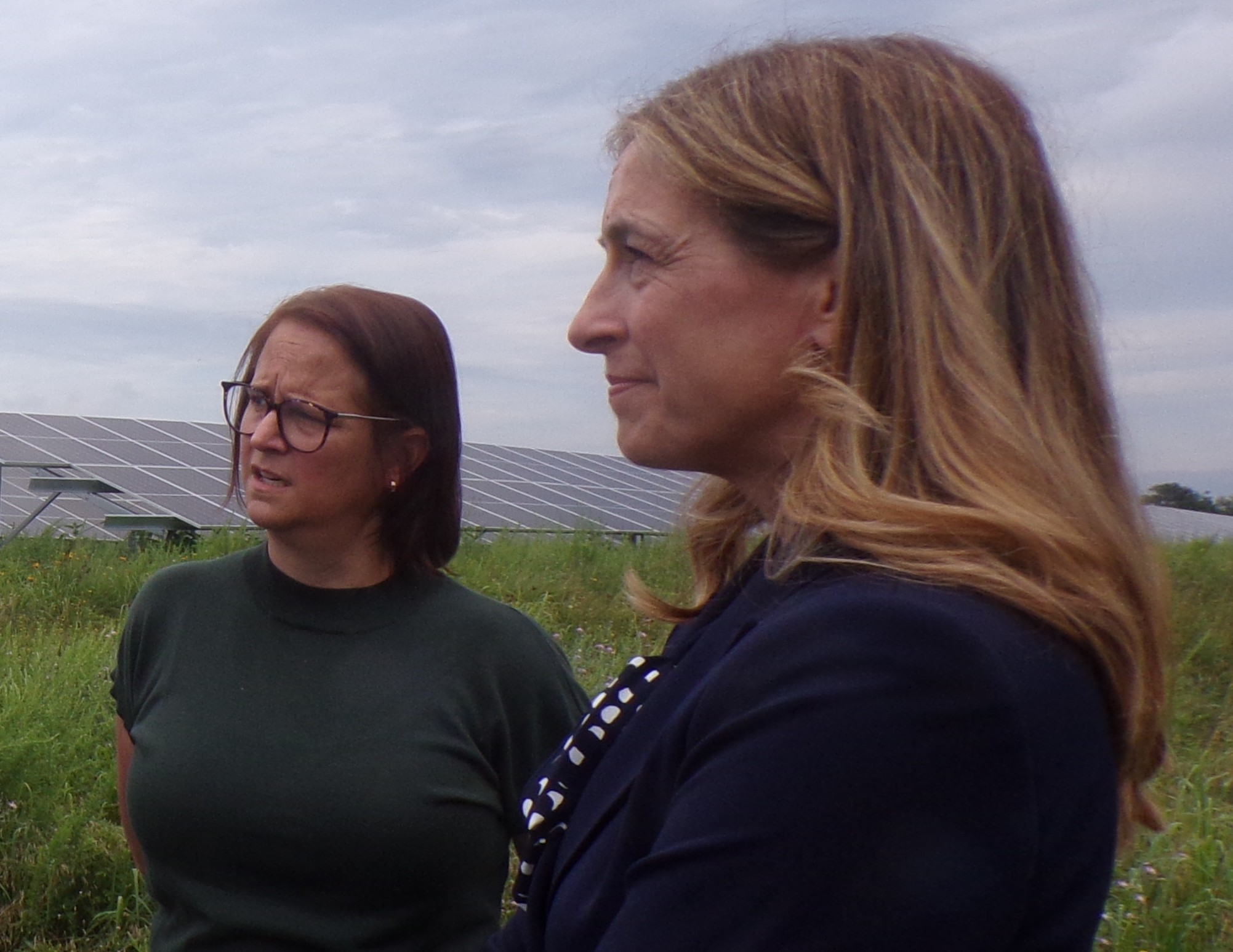
Katz added, "This was a landfill. It's exactly where solar should be. It creates jobs, energy, and ratable. It's a win, win, win."
Which just suffered a significant loss because of Trump.
"Local subscribers buy at a substantial discount," said Gouin. "On Monday, the President put all this work into doubt."
"This is jobs," said Lewandowski. "This is dozens of fulltime jobs. This is not academic. The so-called big, beautiful bill is a big bust. It's a jobs-killing bill. Organized labor looks at this and says, 'You're killing my ability to work."

In April, Ciattarelli highlighted a multipronged approach to energy productivity and efficiency in New Jersey, which starts with throwing Democrats out of the executive branch.
"The Democratic governor of Pennsylvania is burning seven coal burning plants next door," he noted, alongside an NJ moratorium on gas fired plants. "We need to strike a better balance in all respects - and natural gas is the bridge to the future. ... Under [then-Governor] Tom Kean we had an energy department, but what we have now are the BPU and DEP [Board of Public Utilities and Department of Environmental Protection], which are policy promulgating agencies instead of should be regulatory agencies, which is what they should be. I don't like what I see over there, particularly recently with an equity pricing plan, which is them covering their ass for electrical bills going through the roof. Even Democratic legislators are running for the hills on that one."
Post budget, Democrats tried to make him run for the hills, noting Trump's repeal of tax credits, which would throw an estimated 13% electricity bill hike onto the backs of New Jersey ratepayers.
“Those predicted increases would be added to the already rising costs for electricity customers,” reports NJ Spotlight, with “people in Mid-Atlantic states, such as New Jersey, [seeing] electric price increases ‘more than the national average.’”
More context on the solar impact, via Reuters:
"One fact dominates the U.S. economy: it needs more power. After a long period in which demand for electrons flatlined, it is now rising again. Beyond gigantic data centers essential to artificial intelligence, the rise of battery technology, factory robots and more means that everything from transportation to industrial production will increasingly be electrified. This surge has, in large part, been fed by renewables like solar and wind. Yet President Donald Trump’s recently passed 'Big, Beautiful Bill' may vaporize construction of a vast sum of green power that looked set to be built under previous policy, equivalent in capacity to every nuclear plant in the country. Trying to substitute in fossil fuels or atom-splitting is impractical and expensive.
"The Inflation Reduction Act, passed in 2022 under President Joe Biden, offered tax credits for building carbon-free electricity generation and storage, as well as domestic production of solar panels, batteries, wind turbines, and components for nuclear and geothermal plants. These were substantial fillips: new solar farms, for instance, received either credits worth up to 30% of their required investment, or subsidies per watt of power generated. Trump’s signature tax-and-spending legislation kicks out much of this support. Subsidies remain, for the moment, but will be cut years before they were scheduled to expire, beginning next year. Granted, those for nuclear, geothermal and batteries remain, but solar is the biggest chunk of growth on the grid and will be pummeled."
This, too from Investor's Business Daily:
"Solar stocks retreated Tuesday after President Donald Trump issued an executive order on Monday ending subsidies for green energy sources. The Department of Energy released a corresponding report the same day warning of a major spike in blackouts by 2030 due to the retirement of coal-fired plants.
"The White House on Monday released the new executive order that eliminates subsidies for "unreliable" green energy sources, like wind and solar. The order claims that such projects displace "affordable, reliable" dispatchable domestic energy sources, which "compromises our electric grid." Dispatchable energy sources include conventional energy sources like fossil fuels. President Trump's announcement claims that reliance on green subsidies threatens national security by making the U.S. dependent on supply chains controlled by foreign adversaries."