
The Blue Wall Didn’t Just Hold — it Flattened the NJGOP
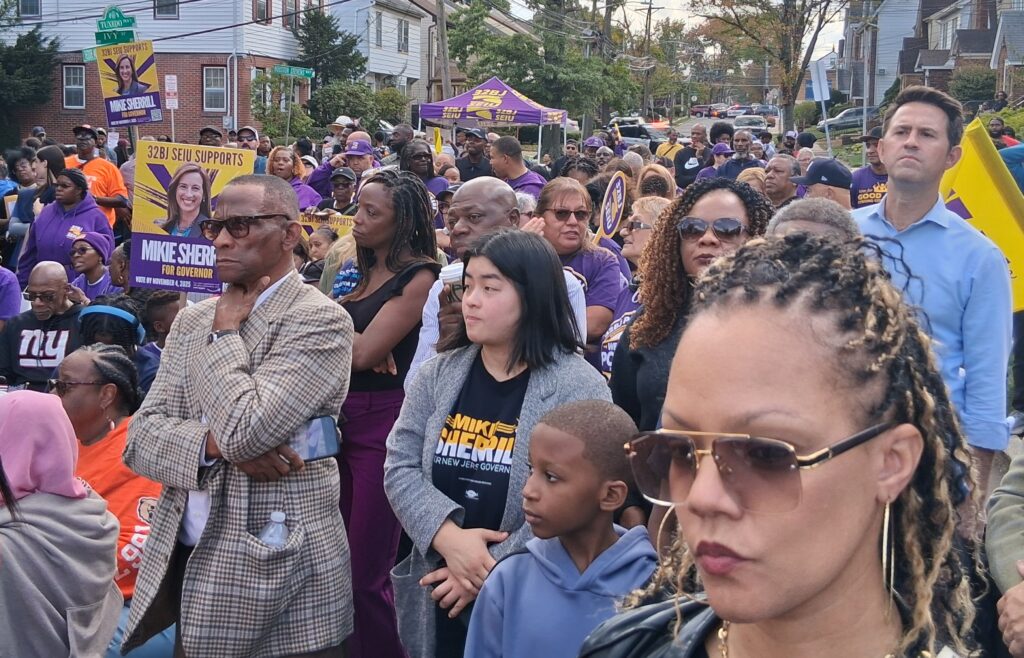
Jack Ciattarelli was on track for victory in mid-October. However, the rise of local “No Kings Day” protests, worries about the upcoming November 1 SNAP benefit cuts, and widely shared images of the East Wing renovation all shifted the electorate’s mood — especially among undecided, younger, and Latino voters — just as early voting started. At that point, Governor-elect Mikie Sherrill gained a surge of momentum that her otherwise sluggish campaign had lacked.
Looking back, the NJGOP sailed into a perfect storm.
This year’s election results — Ciattarelli’s 13-point defeat, the GOP’s loss of five Assembly seats (including in Morris and Atlantic counties), and a wave of municipal defeats across once-reliable Republican suburbs — show how precinct-level organizing, early-vote infrastructure, and disciplined Democratic machine politics secured the victory.
It's a wake-up call for the NJGOP, too — an organization composed of 21 county-based groups with limited central coordination that, unlike the Trump 2024 Presidential campaign, has been too slow to adapt to the state’s changing demographics and cultural shifts, and why the future for Republicans must now concentrate on the counties and communities they’ve long neglected.
Trump vs. the Blue Wall- Part 2
New Jersey's Blue Wall includes Essex, Hudson, Union, Passaic, and Bergen counties. It’s home to the state's most powerful Democratic county organizations —political machines that consistently provide the margins needed to offset Republican strength in other areas, such as Ocean and Monmouth counties.
Just last year, Donald Trump’s performance in New Jersey showed that the Blue Wall might be weakening. Trump won Passaic County thanks to strong Latino support, shifted several counties to the right, and scored notable wins in working-class towns across the state, including Lodi, Wood-Ridge, and Garfield in Bergen County. Some questioned—and many Republicans hoped—that the Democrats’ suburban-urban North Jersey coalition (the core of the Blue Wall, which runs along the Garden State Parkway and NJ Turnpike from Bergen to Middlesex counties) was falling apart.
But Trump's strong performance in 2024 was short-lived. In fact, all of Trump's gains were reversed in this election.
Expecting Ciattarelli to be a formidable opponent, state Dems knew the way to defeat him and the NJGOP was through their advantage in ground organization —especially with a focus on early voting.
In fact, state Democrats and the national DGA spent the past year rebuilding their campaign infrastructure and addressing their perceived weaknesses: candidate enthusiasm and voter mobilization.
According to early ELEC independent expenditure reports and coordinated IE disclosures, over $40 million in Democratic-aligned spending flowed into New Jersey in 2025 — much of it directed toward precinct-level turnout modeling, voter targeting, and coordinated field efforts.
The investment paid off.
The refortified Blue Wall not only held but also delivered a potentially deadly blow to the NJGOP.
What follows are the key stories from this year’s elections — and their implications for the NJGOP as it heads toward the 2026 U.S. Senate and Congressional races, as well as the 2027 state legislative elections.
“Déjà vu all over again” — As in previous years, the Blue Wall counties of Essex, Hudson, Union, Passaic, and Bergen delivered a significant plurality (almost 320,000) for Sherrill — nearly 71.75% of her total 446,000 statewide margin. In 2021, Ciattarelli performed notably better in these counties, losing to Gov. Murphy by 207,695 votes – a smaller plurality (because of lower turnout) but enough to give Murphy his narrow 84,000-vote victory. But this year, the Blue Wall delivered Presidential election numbers. How Presidential? Consider this: In the 2020 Presidential election, the five counties accounted for a 494,141-vote plurality for Joe Biden, which was also nearly 70% of Biden’s statewide margin of victory.
Despite talk of the Latino vote shifting to the right, election results from the 2021 gubernatorial race and the 2025 race remain consistent — and still strongly favor the Democrats. For example, in two of the most-watched cities, Union City and Paterson, the winning margins this year were the same as in 2021. Gov. Murphy won Union City by 70 points in 2021, and this year Sherrill won by 69; in Paterson, Gov. Murphy’s margin was 70 points in 2021, and this year Sherrill's margin was 71.
Bergen County: Donald Trump came within 3% of winning Bergen County last year. As a result, the Bergen GOP was optimistic about a big Ciattarelli win, a potential upset in the LD-38 Assembly race, and winning numerous municipal races. One problem: the Bergen Democrats were prepared. Sherrill defeated Ciattarelli here by over 36,000 votes (55–44%), mainly due to Bergen’s Blue Wall—the area with towns along the Route 4 corridor, including several of Bergen’s largest (and bluest) towns—Englewood, Fort Lee, Hackensack, Teaneck, Bergenfield, and Fair Lawn.
Sherrill defeated Ciattarelli in these six Route 4 towns by more than 20,650 votes, which accounted for over half (57%) of her winning margin in Bergen. This was like the large pluralities secured by Gov. Murphy in 2021 and County Executive Jim Tedesco in 2022.
If you think that’s troubling, the Bergen GOP’s challenges are about to become even more daunting next November. Three of Bergen County's top vote-getters will be on the ballot: Bergen native Sen. Cory Booker (with Presidential aspirations), Rep. Josh Gottheimer, and County Executive Jim Tedesco.
Banking early votes: At the completion of Early Voting (a combination of Vote by Mail and In-Person Early Voting), Mikie Sherrill (based on Voting Registration) had banked more than 300,000 votes than Ciattarelli.
Democratic State Chair Leroy Jones, the architect of DSC’s ground operation, stated that opposition to President Trump’s policies created “a perfect storm” in which turnout (not just in New Jersey but also in New York City and Virginia) exceeded all estimates. New Jersey’s turnout was expected to be about 2.6 million, but actual turnout was closer to 3.6 million — the highest in a non-presidential election since 1998.
With the 300,000 more early votes banked, Ciattarelli would have needed more than 60% of the Election Day vote to make up this deficit to win the election.
Sailing into the Perfect Storm: The CNN exit polls offer some insights into what kind of perfect storm the NJGOP was sailing into.
Exit polls show that Sherrill gained crucial support from undecided and late-deciding voters, indicating her campaign gained momentum in the weeks before Election Day. Among the 6% of voters who made their final decision in the last week, Sherrill led 70% to 29%, and she maintained a 59% to 40% advantage among the quarter of voters who finalized their choice in the first three weeks of October. This timing aligns with several high-profile events: the October 18 “No Kings Day” messaging push and press coverage, public reaction to the East Wing renovation images (October 23), and the looming November 1 SNAP benefits deadline.
Illustrating how national political attitudes influenced NJ voters’ choices, the exit polls also showed that Sherrill voters did not like President Trump: 97% of Sherrill supporters cited opposition to Trump as a motivating factor, and 91% disapproved of Trump’s presidency overall. Conversely, 92% of Ciatarelli’s supporters approved of Trump as President, with 98% strongly approving.
Jack Ciattarelli: Ciattarelli deserved a better outcome. According to all accounts (including the press), he was a strong candidate with boundless energy who, despite the results, ran an impressive campaign with his hardworking, dedicated team. No candidate worked harder than Ciattarelli. He was a Happy Warrior who genuinely cared about the state and its residents and was comfortable in all settings — whether on Main Street or Wall Street. Had he been elected, he would have been one of the most impactful Governors in recent times — someone who combined modern populist themes with mainstream Republican principles.
Ultimately, the result of this election wasn’t about a candidate’s strength or weakness — but rather the power of ground infrastructure when fully activated across the Blue Wall. Just as the Blue Wall was reinforced, it’s now time for the NJGOP to pursue new strategies and methods to engage people directly in the counties and communities within the Blue Wall.