
The Housing Crisis Is Real. The Question Is Whether the Response Will Produce Justice.
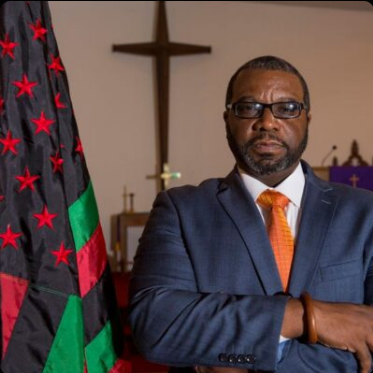
By Rev. Dr. Charles Franklin Boyer
Yesterday, Governor Mikie Sherrill unveiled a major housing strategy intended to address New Jersey's affordability crisis. The administration's report concludes that New Jersey must build hundreds of thousands of additional homes in the coming years if the state hopes to keep pace with demand, reduce costs, and remain economically competitive.
The scale of the challenge is undeniable.
Across New Jersey, families are struggling to afford rent. Young adults are questioning whether they can remain in the communities where they were raised. Seniors are being priced out of neighborhoods they helped build. Homelessness remains a persistent challenge. And for many Black families, homeownership and wealth creation remain further out of reach than they should be.
In her remarks, the Governor acknowledged two realities that deserve attention. First, she recognized the connection between housing and the racial wealth gap. Second, she acknowledged the important role faith communities can play in helping address our housing challenges.
We heard those commitments.
As we have argued through the Statewide Black Agenda, the challenge facing New Jersey is not simply a housing supply crisis. It is also a racial equity crisis, a community stability crisis, and a wealth-building crisis.
The question before us is not whether New Jersey needs more housing.
It does.
The question is whether the solutions pursued will address the historic inequities that have left Black families with less wealth, lower rates of homeownership, and fewer opportunities to benefit from growth and redevelopment.
The true measure of success will not simply be the number of units built.
The true measure of success will be whether Black families can afford to remain in their communities. Whether working-class residents can stay in neighborhoods experiencing redevelopment. Whether renters are protected from displacement. Whether first-generation homebuyers can build equity. Whether wealth created by public investment remains rooted in the communities that need it most.
There is significant overlap between the Governor's housing strategy and priorities outlined in the Statewide Black Agenda. The administration is focused on affordable housing production, expanding housing opportunity, revitalizing underutilized properties, and increasing pathways to homeownership. These are all conversations Black leaders and advocates have been advancing for years.
But production alone is not justice.
If New Jersey builds thousands of new units while Black homeownership remains stagnant, the racial wealth gap will remain.
If neighborhoods are revitalized while longtime residents are displaced, we will have mistaken development for equity.
If public dollars create value but ownership remains concentrated elsewhere, we will have increased housing without expanding opportunity.
That is why the Statewide Black Agenda continues to call for intentional policies that connect housing to wealth building, tenant protection, community ownership, and anti-displacement strategies.
We were particularly interested in the Governor's acknowledgment of faith communities.
Black churches have long been doing housing work, often without recognition or significant public investment. They have housed families, prevented homelessness, provided emergency assistance, organized tenants, stabilized neighborhoods, and preserved community institutions during periods of disinvestment.
The opportunity before the administration is to move beyond recognizing the value of faith communities and toward meaningful partnership.
Across New Jersey, churches own land, buildings, and community assets that could support affordable housing development, transitional housing, community land trusts, and pathways to homeownership. The Statewide Black Agenda specifically calls for empowering Black churches to be partners in creating affordable housing solutions.
Similarly, if the administration is serious about reducing the racial wealth gap, then housing policy must include a serious commitment to Black homeownership.
Housing is not merely shelter.
For many families, it is the primary vehicle for building wealth, creating stability, and passing opportunity from one generation to the next. Any strategy aimed at addressing the racial wealth gap must grapple directly with the barriers that continue to prevent many Black families from purchasing and retaining homes.
We also cannot ignore those who remain most vulnerable: returning citizens, Black veterans, families facing eviction, and residents living on the edge of homelessness. A housing strategy worthy of New Jersey must create pathways for those communities as well.
The Governor's report correctly identifies the scale of New Jersey's housing challenge. The task before all of us now is ensuring that the response does not simply produce more housing, but produces more justice.
That means confronting the racial wealth gap.
That means expanding Black homeownership.
That means protecting tenants from displacement.
That means creating pathways for returning citizens, veterans, and working families to secure stable housing.
That means investing in the Black churches and community institutions that have been holding neighborhoods together long before housing became a statewide priority.
New Jersey has an opportunity to lead.
Whether that opportunity becomes transformation will depend not on what is done next.
Dr. Charles F. Boyer
Salvation and Social Justice
Liberating Public Policy Theologically