
The Economic Argument in Battleground CD-7

Maybe the past president Donald Trump most resembles is Martin Van Buren, who infamously ate with gold spoons while the country tanked, the closest thing to the Emperor Nero America produced up to that point.
Of course, Van Buren was a lightweight in the corrupt vulgarity department compared to Trump, though in a somewhat spooky historical echo of the present, U.S. Rep. Charles Ogle of Pennsylvania did propose to cut from the general appropriations bill $3,665 for improvements to the President's House.
Now, as people try to combat a crushing morass of household costs, the price of the sitting Van Buren descendant's own White House "improvement" project have ballooned to $600 million, as Trump personally bulks his own income, through crypto-related investments, by $1.4 billion. This while the Trump Administration seeks billions for an unconstitutional war Trump never bothered seeking Congressional approval to wage, which, incidentally, drives up the cost of gas, to add to family economic woes already suffered as a consequence of Trump's reckless tariffs, and federal budgeting that plays havoc with those who depend on Medicaid.
From The Washington Post: Oil prices briefly topped $100 a barrel. Mortgage rates hit their highest level in nearly a year. The U.S.-Iran ceasefire in April delivered consumers some relief at the pump. But that’s over now. After dropping below $4 per gallon, gas prices on Friday averaged $4.10 and could test their 2026 high of $4.55.
And from NBC: The average interest rate on a 30-year U.S. mortgage rose to 6.85% on Thursday, its highest level since June 2025, although it ticked down to 6.81% on Friday.
According to an FDU Poll released today:
New Jersey residents rate both the national economy and the job market much like Americans overall, with majorities giving each a negative review. Fifty-eight percent of New Jerseyans rate the United States economy as “bad” or “very bad,” nearly identical to the national figure of 57%. Similarly, 53% of New Jerseyans rate the U.S. job market negatively, compared with 49% nationally. The national figures come from the SSRS Economic Attitudes Tracker, fielded quarterly with a representative sample of U.S. adults ages 18 and older.
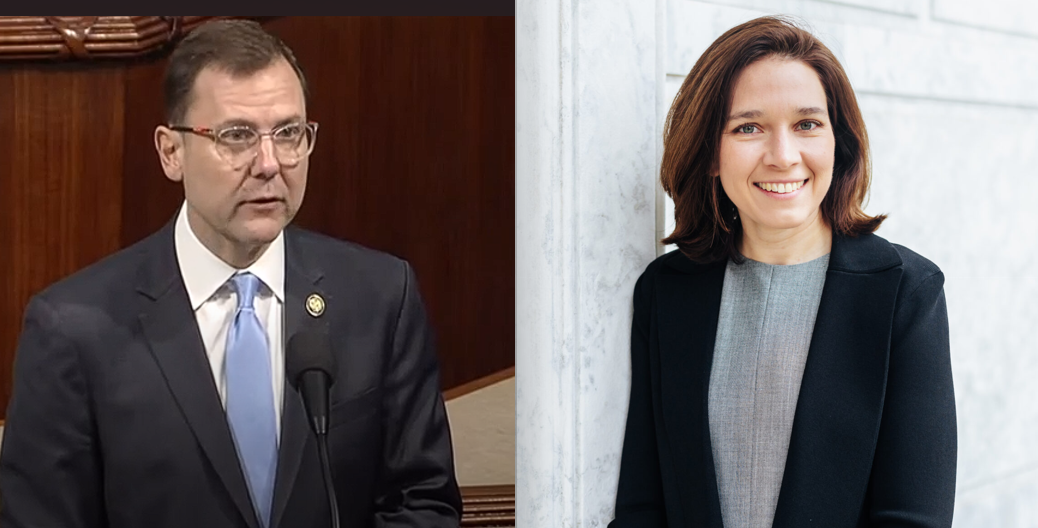
All of this is obviously dreadful news for incumbent U.S. Rep. Tom Kean, Jr. (R-7), who faces a stiff challenge this November from former Navy helicopter pilot Rebecca Bennett in New Jerey's most watched battleground congressional district. One of Trump's garish golf courses sits in the 7th District, though median household income in CD-7 equals $133,000, where 71% of adults drive to work (and worry about Trump's repeated efforts to shut down the Gateway Tunnel project, which Governor Mikie Sherrill has repeatedly protected in court).
Kean defeated incumbent Democrat Tom Malinowski in the Biden midterm election of 2022 by about 9,000 votes to secure the seat, running on a message of fighting inflation. Bennett - a political moderate and Bridgewater mom of two daughters - arguably appears better suited than Malinowski to speak directly to the pressing kitchen table issues of voters in the 7th, where 59% of the adult population is married, and where the bulk of households (72%) are occupied by married couples, according to Census Reporter. Four years ago, Kean zapped Malinowski for stock trading and now finds himself vulnerable on the subject. "Let’s not forget," Bennett said, "Congressman Tom Kean Jr. traded up to $340,000 worth of stocks in June both during and after his absence from Congress."
Across a broad spectrum, Bennett can easily argue that Trump's economic policies have injured families in the 7th District, starting with his 10 percent tariff on nearly all countries, effective February 24, 2026, applying to an estimated $1.2 trillion (34 percent) of annual imports. The tariffs especially create a larger burden on lower-income taxpayers than on middle- or higher-income taxpayers. But there's more to it.
The Tax Foundation states, “[t]axes on imports (tariffs) are regressive in that they apply to consumption, and lower-income households tend to consume a greater share of their incomes than higher-income households. But they are particularly regressive because the tariff schedules tend to apply higher rates to lower-end goods than they do to luxury goods…” To put it simply, regressive taxes like tariffs place a higher burden on lower-income populations across the U.S. Tariffs are a tax that ultimately burdens small businesses and lower-income consumers, according to the American Sustainable Business Network.
Don't believe it? Take a look at this story last year from The Hill:
Democrats on the bicameral Joint Economic Committee (JEC) estimate that, on average, U.S. households have paid nearly $1,200 in additional costs in connection to President Trump’s sweeping tariffs.
In a report released Thursday, the committee found that consumers paid more than $158 billion as a result of the additional levies from February to November. That marked an average of more than $1,197 per household during that period, with the average monthly cost rising from more than $54 in February to more than $181 in November.
That information is basically corroborated by Tax Foundation:
In 2025, the Trump tariffs amounted to an average tax increase of $1,000 per US household.
Worse:
"We estimate the new Section 122 and Section 232 tariffs announced and imposed will increase taxes per US household by $700 in 2026."
Then there's the war, which, according to Mark Zandi, chief economist at Moody's Analytics, is costing the average household more than $1,200. "According to Zandi’s calculations, the price of gas is costing the average household $360 more. Groceries are costing the average household an additional $240, he said. Meanwhile, other modes of transportation are costing $110 more. Higher interest rates are adding another $205 to household bills, he said."

Linda Bilmes, professor at the Harvard Kennedy School and expert of budgeting and public finance, said "the very up-front, short-term costs [of the war] are, to date, about 120 billion. But that doesn't include another 250 billion for rebuilding the hundreds of U.S. facilities across the Middle East that have been destroyed or damaged. And then there are long-term costs and economic costs, which are the sort of base of the iceberg, and they are much larger. ...One of the significant costs is caring for veterans, and here again, the administration has lowballed what we can expect in terms of cost. It has mentioned the several hundred troops who have been wounded in action, but it hasn't mentioned the 15-, 16-, 17,000 troops who have been exposed to contaminants and toxins and will be receiving lifetime disability benefits for breathing difficulties.
In addition, Trump's "Big Beautiful Bill" cuts had severe consequences for real people in New Jersey. According to NJ Spotlight News: Sherrill administration officials said the federal tax changes, at least temporarily, have automatically cut into the state’s own tax base. The result is a roughly $500 million projected revenue loss. “This isn’t a direct federal cut, but it’s an impact of the federal legislation,” state Treasurer Aaron Binder told lawmakers this month. In all, an estimated $100 million in costs will be shifted onto state taxpayers after July 1 due to changes to public-assistance programs that are required under H.R. 1, according to the “Budget in Brief” released by the Sherrill administration.
Now, Kean and his allies will try to make a case for HR-1's supposed CD-7 silver lining, namely the restoration of the SALT Deduction.
But according to an FDU Poll:
"While the recently passed federal budget heavy on tax cuts for wealthy Americans] accomplishes a major goal of New Jersey’s congressional delegation by increasing the federal SALT deduction cap, the bill overall is viewed unfavorably by most voters, and the temporary tax cut doesn’t do much to change that. According to the latest results from the FDU Poll, voters also hold middling views of NJ Transit, with the average New Jersey voters awarding it a C."
“The hope was that putting in the SALT deduction would make the budget bill more palatable to voters,” said Dan Cassino, a Professor of Government and Politics at Fairleigh Dickinson University, and the Executive Director of the FDU Poll. “But even voters who are going to get a tax cut from this bill don’t seem to like it.”
Overall, 27 percent of likely voters in the state say that they approve of the budget bill, with 61 percent disapproving. Democrats are nearly unanimous in opposition, with 94 percent saying that they disapprove of the bill, along with 64 percent of independents, but 62 percent of Republicans say that they approve of it.
“The bump in support among independents is good news for Republican incumbents like Tom Kean, Jr, who voted for the bill,” said Cassino. “But even an eight-point increase isn’t great when sixty percent of independents say that they oppose the bill.”
As regular New Jerseyans endure overwhelming costs, a CD-7 mail piece (top) targeting Kean released by an independent group highlights the Republican Congressman's vote in favor of Trump's "big, beautiful bill," which cut Medicaid for 240,000 New Jerseyans, while Trump plows ahead with an unauthorized war, that he said months ago would end, begging the American people for money, slouched in an Oval Office that looks like an IMAX movie of gold paint, which at the very least would no doubt would make Trump's fellow monarchy fawning president, Martin Van Buren, pout with envy.