
Hackettstown’s All-Republican Town Council is Listening to its Constituents About ICE
BY GUY CITRON
There were disagreements and uncomfortable moments. That should not be forgotten. But overall, the November 12th Hackettstown Town Council meeting has shown that the all-Republican Mayor and Council are listening.
In the wake of yet another mass raid on the morning of October 19th, several people made public comments regarding ICE’s recklessness and terror in town. Many pointed out that probable cause, due process, civil rights, and even basic traffic laws are clearly being abused by the agency.
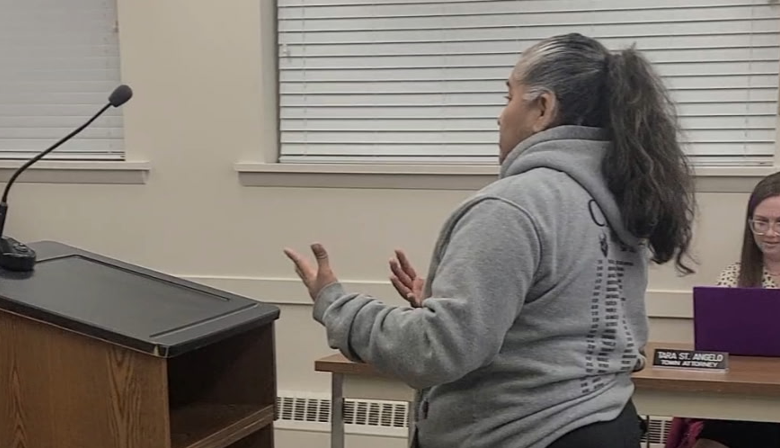
The emotional peak of the evening was testimony from a local teenage Hispanic girl. In a tear-jerking back-and-forth with her representatives, she explained how they could never truly understand what it felt like to live in town with brown skin.
She described having gotten used to racial slurs thrown at her and seeing friends harassed from passing cars for being Black. But now she is scared that she or someone she loves could be ICE’s next victim on the very same streets.
She also spoke of classmates, families, and neighbors who are also afraid to go about their everyday lives. That seemed to help all the other important observations break through. This is truly a community crisis, one that could have profound and lasting destructive effects on the town, unless its leadership rises to the occasion.
And the other testimonies demonstrated just how profound those effects already are. A local paint store owner explained how immigrants were some of his best customers. After an operation in the parking lot next to his building, he even described finding a detained man's backpack, including his lunch and personal belongings, discarded in his private dumpster. He called it a horrible disrespect to the man and questioned whether ICE even had the right to use the private property next door, let alone his garbage can.
A local nurse explained how fear of ICE has caused patients to delay necessary medical treatment, sometimes resulting in hospitalization. Imagine the strain that must put on a working family. Parents also described children afraid to walk to school, and longtime residents described wondering whether their community was still a safe place to live.
One woman, a naturalized citizen who escaped the Soviet Union and now carries her passport because she speaks with an accent, wondered whether she should move away. But who would even want to move here during this madness?
At first there were knee-jerk defensive reactions. One councilman, a former police chief himself, reminded everyone that he had been the first to hire a Hispanic officer in the county, perhaps as a sign of good faith. While that historical leadership deserves respect, the room reminded him that such was beside the point of what leadership was required now.
Another councilman asked whether the Council should take a stand against ICE if the majority of its constituents supported the agency. The results of November’s election were thrown back at him as contrary to his concern.
Another kept reiterating that their hands were tied, which, despite being an odd metaphor given the reality, was meant to emphasize the point that they could not fight the federal government. Again, that was beside the point when considering what is required of a public official in these times.
Because nobody was asking Hackettstown to take over federal immigration policy. They were asking their local government to do what they can to protect the town and its people.
For ice between would-be political interests to truly melt, and for ICE’s anti-constitutional ways to be stopped, there must be small movements of change between the particles of people who make up the glaciers of status quo. So, naturally, as the night wore on, and the testimonies piled on, the ice started to melt.
The pun works because, against most expectations, the town officials started openly contemplating several items, including symbolic, practical, and proactive actions they may indeed consider moving forward on. Things they can do to support the community, recognize the problem, and do what they can.
For example, an official acknowledged that traffic laws fall within local jurisdiction. Contrary to the witnesses who spoke, the chief of police reported no known ICE traffic violations. But drunk driving would still be drunk driving no matter who was behind the wheel. Being drunk on power is no less excusable.
If federal agents are speeding recklessly through residential areas, near people on sidewalks and other drivers, their federal job does not give them the right to put the people of Hackettstown in danger. Categorically, it is, in fact, a public safety issue. It’s only a matter of time, one resident suggested, before ICE kills someone by accident. That is, if not on purpose.
Another important exchange concerned the masked agents driving unmarked vehicles and claiming to be federal. How are residents supposed to know whether these people are actually sworn officers of law enforcement?
Interestingly, town officials repeatedly advised residents to call 911 if they witnessed what appeared to be an abduction by unidentified individuals. They explained that local police should help verify a federal officer’s identity and assured residents that calling for help would not automatically subject them to their own interrogation. They even encouraged residents to share that information with their neighbors.
Another councilman expressed that certain ICE stops were indeed a direct violation of the Fourth Amendment. That’s not the only one. But it’s certainly one that mentions how freedom and due process work. It guarantees all persons the right to safety and security against unlawful arrests and detentions. That’s why the Fourth Amendment requires warrants supported by probable cause. Not political witch hunts, scapegoats, or persecutions.
It’s become the opposite of innocent until proven guilty. That is the open legal dimension of this whole dilemma. When federal agents and their departments consistently violate civil rights, the Constitution matters more, not less, and local officials do not need special powers to recognize and work to stop an abuse of power. The rights to resist tyranny are actually responsibilities of citizenship and self-government. The people are the ultimate check on authority.
There were other concrete suggestions along those lines. Residents proposed barring ICE from using town-owned parks, parking lots, and municipal properties when staging operations. Others suggested formal resolutions expressing solidarity with the immigrant community, training municipal employees on their responsibilities related to the problem, and making resources available to the community through the town’s website. The council acknowledged that some of these ideas deserved discussion.
Then came perhaps the most consequential moment of the evening.
After public comment had closed, and people were leaving the room, a councilman could be heard openly talking about drafting something over the following weeks. The precise scope remains unclear, but the meaning of the entire civic engagement should not be overlooked.
What had begun as residents demanding answers, for weeks, publicly, both inside and outside of that room, had developed into an elected official saying out loud, on the record, that he was considering municipal action. It felt like progress. They deserve that credit.
But to be clear, none of this means that Hackettstown has solved the problem. Nothing was officially adopted that evening. No new restrictions on federal agents were enacted. And the residents who testified still deserve answers about what happened to their neighbors taken away during the raids on August 6th and October 19th. They should know whether their families are safe, and whether federal agents are respecting the law.
Now the public has an opportunity to follow up on what its representatives actually said: Will the council formalize the emergency guidance it offered? Will it clarify how local police handle reckless driving by federal agents? Will it consider restricting ICE’s use of municipal property? Will it publish resources for families who feel terrorized? And will the council move forward with a resolution?
These are questions about what government is supposed to do for the people it serves. Hackettstown’s all-Republican Town Council has begun to answer. It has an opportunity to show leadership rooted in core American values.