
Governor Murphy Signs the Safe Communities Act Into Law
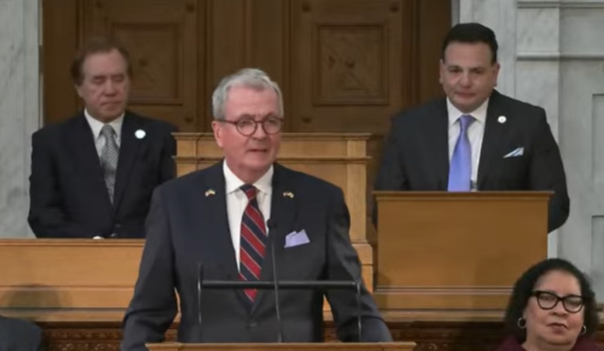
Governor Murphy Signs the Safe Communities Act Into Law
Legislation Directs the New Jersey Attorney General to Develop Statewide Model Policies to Ensure Sensitive Locations – Such as Schools, Hospitals, and Courthouses – Remain Safe, Welcoming, and Accessible to All Residents
Governor Pocket Vetoes Two Additional Bills That, While Unequivocally Intended to Defend Immigrant Communities, Could Inadvertently Put These Communities and the State at Risk
TRENTON – Governor Phil Murphy today signed into law A6308/S5036, the “Safe Communities Act,” landmark legislation that directs the New Jersey Attorney General to develop statewide model policies to ensure that essential public institutions remain safe, welcoming, and accessible to all residents. The legislation requires the Attorney General, in consultation with relevant stakeholders, to create and publish model policies to ensure personal freedom at designated sensitive locations throughout the state. These locations include places such as schools, hospitals, and courthouses where New Jerseyans access critical services such as education, health care, and justice. In addition, the bill directs the Attorney General to develop a separate model policy specifically tailored to places of worship, recognizing the importance of ensuring that individuals can freely and safely participate in religious life.
“Today, we reaffirm our longstanding commitment to ensuring the people of New Jersey – particularly our immigrant families – are safe, secure, and supported in navigating their daily lives easily and confidently,” said Governor Murphy. “Public spaces such as houses of worship, schools, hospitals, and courthouses are places of trust that should welcome and safeguard every member of society. Whether you’re praying in a church, studying in school, receiving medical care at a hospital, or seeking legal relief, no one should live in fear or uncertainty or be deterred from seeking essential services due to their immigration status.”
Under the new law, certain governmental departments and agencies will be required to adopt the Attorney General’s model policies, or policies that provide equal or greater protections, within 180 days of their issuance. Agencies must also make those policies publicly available to promote transparency and public awareness. The Safe Communities Act takes effect immediately and reflects the Murphy Administration’s continued commitment to inclusion, dignity, and public safety for all residents.
The Governor today regrettably could not sign two pieces of legislation due to concerns that these bills, despite noble intentions, would unintentionally undermine protections for New Jersey’s immigrant communities. Under the New Jersey Constitution, legislation that is not signed after being passed by the Legislature during the final 10 days of a legislative session does not become law.
The first bill, A6309/S5037, known as the “Privacy Protection Act,” concerned the collection and sharing of certain personal information and aimed to establish broad privacy protections for personal information collected by State and local government entities and health care facilities. The bill would have prohibited the collection of certain sensitive details — including immigration status, place of birth, Social Security number, and individual taxpayer identification number — unless they were essential to determine eligibility for public services or benefits. The legislation also addressed consent requirements for the disclosure of records, restrictions on sharing motor vehicle data, and civil liabilities for violations of privacy protections. Under the bill, as passed by both chambers of the Legislature, agencies would have been expected to update confidentiality policies to reflect the bill’s requirements, and the Commissioner of Health would have been required to work with the Attorney General to develop standardized consent forms in multiple languages pertaining to the disclosure of records by health care facilities. Unfortunately, the bill included a drafting oversight – not previously discovered during the legislative process and the Governor’s consideration of the initial bill – that, if signed into law, could jeopardize billions of dollars of federal funding.
“I was hopeful that we would be able to get this personal data privacy protection bill across the finish line during the final days of my term, as I strongly support the rationale behind this legislation,” said Governor Murphy. “Unfortunately, upon further review of the legislation, we discovered a drafting oversight that could create significant complications when it comes to advancing our shared goal of protecting New Jersey’s immigrant communities.”
“At this stage, it is unfortunately too late to amend the bill language. As a result, the bill as written could be construed to conflict with federal law and, if signed, could jeopardize billions of dollars in federal funding for critical programs that serve the people of New Jersey” continued Governor Murphy. “I deeply wish there was sufficient time left to correct this issue, but it is not possible due to the expiration of the legislative session. Therefore, the only responsible option is to decline to act on the bill at this time. I have outlined my recommended amendments to the legislation and am hopeful that the Legislature will reintroduce and pass this version of the legislation in the coming weeks so it can be signed into law at the soonest possible opportunity."
The second bill, A6310/S5038, intends to codify former New Jersey Attorney General Gurbir Grewal’s 2018 law enforcement directive, known as the Immigrant Trust Directive, and to foster trust between law enforcement and immigrant communities. However, in its current form, this legislation goes beyond the Immigrant Trust Directive in a number of ways, including:
- Removing an exception to the directive’s limitations on cooperation with federal immigration authorities that allows the provision of notice of a detained individual’s upcoming release from custody and continued detention of a detained individual when the detained individual is subject to a final order of removal signed by a federal judge and lodged with a county jail or state prison where the detainee is being held.
- Adding funding appropriated to a State, county, or municipal law enforcement agency to the types of assistance law enforcement may not provide to federal immigration authorities.
These differences are significant enough to potentially elicit renewed judicial scrutiny that could result in diminished vital protections for immigrants in New Jersey.
“The Immigrant Trust Directive, which has been in place since 2018, is one of the greatest successes of our Administration,” said Governor Murphy. “Most importantly, the Directive has withstood judicial scrutiny by multiple federal judges, including one appointed by President Trump and another appointed by former President George W. Bush. Today, the Directive is settled case law in the Third Circuit at a time when our federal judiciary has increasingly taken a more activist posture and struck down critical rights and protections. Both Governor-elect Sherrill and Attorney General-designate Davenport have stated that the Directive is working.”
“I am extremely concerned that signing this bill, which differs from the Immigrant Trust Directive, would open New Jersey up to a new court challenge and renewed judicial scrutiny from judges who may not render the same decision upholding these critical protections,” continued Governor Murphy. “Renewed litigation would also put our time-tested Immigrant Trust Directive at risk, endangering hundreds of thousands of immigrants in New Jersey in one fell swoop. I cannot in good conscience allow that to happen.”
“Re-opening the door to judicial scrutiny of our State’s immigration policies, combined with the Trump Administration’s increasingly targeted actions against states and cities, is a recipe for disaster for our immigrant brothers and sisters and puts them in greater danger,” concluded Governor Murphy. “And that is not something I am willing to risk when the Directive is secure for the foreseeable future.”
The Murphy Administration has advanced one of the most comprehensive state-level immigrant integration agendas in the nation.
New Americans — immigrants, migrants, refugees, asylum seekers, and other newcomers — are vital members of our state’s communities and economy. Early on, Governor Murphy established the Office of New Americans to coordinate statewide efforts to empower immigrants and refugees, expand access to services, and promote full civic and economic participation. Under Governor Murphy, the State resumed its role as Refugee Resettlement Coordinator after it had been outsourced by a previous administration. Through the Refugee Resettlement Program, New Jersey has, since 2021, welcomed more than 13,800 Afghan evacuees following the U.S. withdrawal from Afghanistan; since 2022, provided a legal pathway for Ukrainians displaced by Russia’s invasion through the federal Uniting for Ukraine (U4U) program; and, since 2023, supported the Cuban, Haitian, Nicaraguan, and Venezuelan (CHNV) humanitarian parole program.
New Jersey has been a national leader in creating inclusion and opportunities for every individual regardless of their immigration status. The State was among the first in the nation to provide driver’s licenses to all residents, no matter their status, ensuring safer roads and greater mobility for working families. New Jersey offers in-state tuition and State financial aid to DREAMers, opening the door to higher education for thousands of students who call the Garden State home. The State has also expanded health coverage through the Cover All Kids program, providing insurance to income-eligible children under the age of 19 years regardless of immigration status, ensuring that every child has access to essential care.
The Murphy Administration has accelerated employment, protected worker safety, and helped families achieve stability while strengthening the state’s economy. New Jersey strengthened labor protections to combat wage theft and guarantee paid sick leave for workers, including immigrant workers. During the COVID-19 pandemic, New Jersey made over $100 million in historic relief funding available to excluded New Jerseyans who were left out of federal assistance programs, despite their contributions to federal and State taxes. More recently, the Murphy Administration distributed $2.5 million to support work authorization applications for migrants and has expanded workforce access through Department of Labor and Workforce Development initiatives designed specifically to assist immigrant communities.
New Jersey has also been a leader in protecting our immigrant communities via litigation, including leading the challenge to President Trump’s executive order redefining birthright citizenship and leading the defense of DACA in federal court since 2018.
The Governor has enacted laws strengthening language-inclusive access to government services, improving data equity, and reinforcing protections for immigrant residents. The Administration has also provided consistent supplemental funding, including over $13 million in Fiscal Year 2026, to ensure legal representation for residents facing immigration-related proceedings, recognizing that access to counsel is essential to due process and family stability.