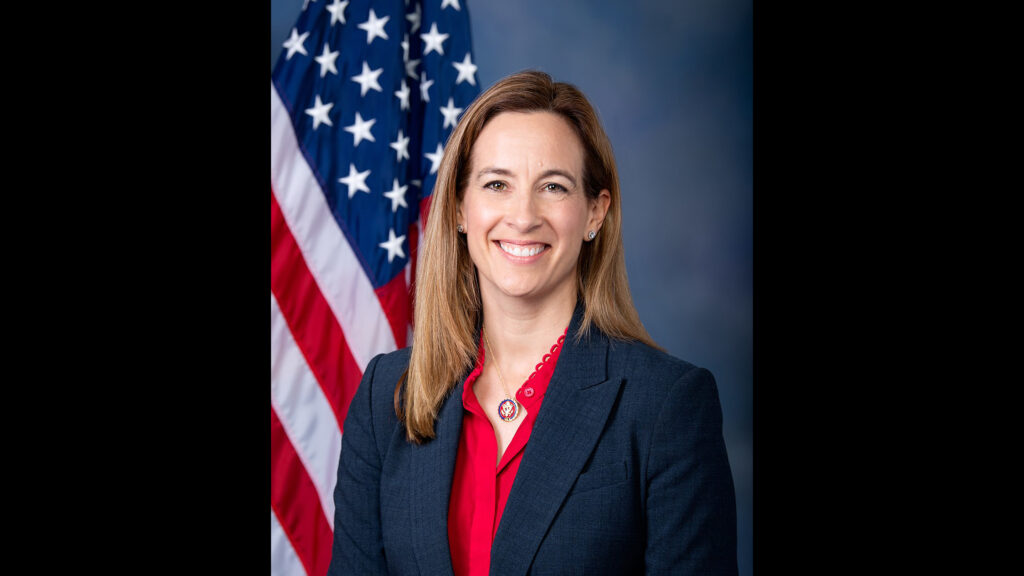
Governor Sherrill Presents Fiscal Year 2027 Budget
March 10, 2026, 2:20 pm | in
FOR IMMEDIATE RELEASE
March 10, 2026
Governor Sherrill Presents Fiscal Year 2027 Budget
“Rising to the Mission: A More Affordable & Accountable New Jersey”
TRENTON – Governor Mikie Sherrill delivered her inaugural budget address on Tuesday, outlining her Administration’s plan to fulfill its mandate of making New Jersey more affordable, protecting our children’s futures, and improving government accountability and transparency. The budget is the most fiscally responsible in years. When Governor Sherrill took office, New Jersey was on track to quickly deplete its surplus, and she immediately set to work developing a budget proposal that reins in spending without creating new taxes on everyday New Jerseyans.
Despite challenging and ever-changing fiscal conditions, as well as instability at the federal level, Governor Sherrill’s proposed budget delivers record property tax relief to middle class families, provides record school investment, and supports initiatives aimed at lowering energy costs. It also includes a full payment to the State’s pension system, making Governor Sherrill the first governor to fully fund the pension system in the first year of an Administration in decades.
“This is an affordability budget, rooted in lowering costs for hardworking families and making state government more accountable to the people we serve,” said Governor Mikie Sherrill. “New Jerseyans gave me a mandate to challenge the status quo and that’s exactly what this budget does – there's no more kicking the can down the road. That’s why I’m cutting the structural deficit nearly in half, and investing in solutions to lower electric bills, protect kids online and expand school-based mental health services, and make it easier to start and grow a small business in New Jersey. I’m also restructuring how state government delivers for people – bringing more transparency with a Report Card on how hard-earned tax dollars are spent and speeding up the permitting process for businesses. With cuts from Washington, New Jersey faces a lot of challenges – but we’ve never backed down from a fight, and we are rising to the mission with a ruthless focus on expanding opportunity for the middle class.”
“This proposed budget is an important step towards implementing Governor Sherrill’s vision of a more affordable New Jersey, while maintaining a strong commitment to fiscal discipline,” said State Treasurer Aaron Binder. “This is a budget that finds solutions to cut costs without compromising services for everyday New Jerseyans.”
The $60.7 billion budget includes a proposed surplus of $5.4 billion, while redirecting over 74 percent of the total budget back into our communities in the form of grants-in-aid for property tax relief, social services, and higher education, as well as state aid to schools, municipalities, and counties. The budget takes crucial steps to rein in costs by nearly $2 billion. While the last 8 budgets increased almost 7 percent annually on average, this budget is 1.6 percent above the FY 2026 adjusted appropriation.
The proposal would raise new revenue by paring back corporate tax loopholes and improving compliance.
MAKING NEW JERSEY MORE AFFORDABLE
As part of Governor Sherrill’s focus on affordability, the FY 2027 budget proposes record property tax relief totaling $4.2 billion. This includes $2.3 billion for ANCHOR, $350 million for Senior Freeze, and nearly $700 million for Stay NJ.
The $250 bonus formerly extended to senior homeowners and renters under ANCHOR is set to expire after FY 2026. Under this budget proposal, senior renters would continue to receive the $250 bonus while many senior homeowners would continue to receive the additional benefit amount through Stay NJ instead.
To protect property tax relief for middle class families, eligibility for Stay NJ would be modified to cap the qualifying income threshold at $250,000, matching ANCHOR. Additionally, the maximum benefit amount for Stay NJ would be capped at $4,000.
With her first budget, Governor Sherrill is committed to improving New Jersey’s fiscal health, starting with ensuring the State’s bills are paid. The FY 2027 budget proposal includes $7.3 billion for the State’s pension system, marking the sixth consecutive full payment. This one-year contribution is already more than the total combined contributions of former Governors Whitman, DiFrancesco, McGreevey, Codey, and Corzine, and amounts to more than double the initial payment by former Governor Murphy. If full payments had been made by previous administrations, the State would have paid $1.15 billion this fiscal year.
Building on the Governor's first two executive orders designed to freeze utility rate hikes and expand power generation, this budget takes important steps to lower electric bills for New Jerseyans. Through off-budget funding sources, the Governor will be able to shield New Jersey ratepayers from rate increases without compromising funding for critical energy assistance programs, effectuating the rate freeze. Additionally, in FY 2027 the Sherrill Administration will direct the Board of Public Utilities to identify funds for another round of Residential Energy Assistance Payments (REAP) for lower-income residents and identify funding to provide further rate relief as needed.
While these are critical steps to helping New Jerseyans now, The Governor also recognizes the need to continue important investments in our grid and bringing new electric supply online. Governor Sherrill will also prioritize expanding energy supply by accelerating timelines for programs such as the Garden State Energy Storage Program and Competitive Solar Incentive Program, as well as aggregating distributed energy resources into “virtual power plants.” Additionally, the Administration is exploring opportunities to expand baseload generation, such as nuclear, to help meet future growth.
Additionally, the budget increases resources at the Department of Environmental Protection to expedite permitting in a variety of areas, including energy generation and grid support projects.
With the goal to ease financial burdens for New Jerseyans looking to buy their first home, Governor Sherrill proposes increasing the Down Payment Assistance Program allocation by an additional $5 million, while reducing transfers from the Affordable Housing Trust Fund by $70 million in order to make room for new construction. Nearly 3,000 new first-time and first-generation homebuyers will benefit from this proposal’s Downpayment Assistance allocation.
This budget includes $11 million for the existing Bringing Veterans Home initiative, which has successfully adopted strategies to transition homeless veterans from temporary housing placements to stable, permanent housing solutions. Governor Sherrill anticipates the Departments of Community Affairs and Veteran Affairs reaching all known homeless veterans this year.
PROTECTING OUR KIDS
Governor Sherrill proposes a record breaking $12.4 billion for K-12 schools in FY 2027, the largest amount in state history and a $370 million increase over last year’s funding. The Governor looks forward to working with the Legislature to modernize and stabilize the school funding formula.
The budget also includes a record $1.4 billion for Preschool Education Aid.
In preparation for New Jersey's first cell phone-free school year this fall, the proposal includes $125,000 for the new Office of Youth Online Mental Health Safety and Awareness in the Department of Health. The office will research and make recommendations to guide responsible use of social media platforms among youth. The budget also includes $500,000 for a new Social Media Research Center at one of New Jersey’s higher education institutions.
An allocation of $15 million for high-impact tutoring – double the amount of FY 2026 – would help nearly 100 more districts and 13,500 more students, with the goal to accelerate learning and address academic achievement gaps spurred by the pandemic.
The budget would also provide 21,000 schoolchildren with free meals through the Working-Class Families Anti-Hunger Act.
Keeping children’s health a top priority, the budget includes $7.2 billion in state funding for New Jersey’s Medicaid program, NJ FamilyCare, which provides comprehensive health care benefits to over 1.8 million New Jerseyans, including nearly half of New Jersey’s children.
Demonstrating the Administration's commitment to supporting families, the proposal includes wide-ranging support for programs servicing parents and children. This includes expanding Family Connects NJ, New Jersey’s nation-leading universal nurse home visiting program, to become available statewide for the first time; allocating $582 million for child care assistance to ensure the full reopening of the Child Care Assistance Program application process; and maintaining support for New Jersey’s Earned Income Tax Credit, Child Tax Credit, and Child and Dependent Care Tax Credit.
MAKING STATE GOVERNMENT MORE ACCOUNTABLE
Governor Sherrill is committed to making state government more accountable to the people it serves.
The budget proposal includes an additional $13.3 million in State funding for the New Jersey Innovation Authority to support major operating initiatives like the Permitting Dashboard and the New Jersey Report Card; supports technology upgrades across State government, including $3 million for the Division of Consumer Affairs to upgrade its licensing system and complaint database; and reduces business registration fees and improves procurement assistance for minority and women-owned businesses.
It also funds new oversight initiatives to save resources long-term – including adding additional resources to the Division of Pensions and Benefits to improve contract compliance, and additional experts at the Department of Education to enhance school district monitoring and prevent sudden financial challenges.
Governor Sherrill is committed to improving transportation across the State so that commuters spend less time on their commutes, and more time enjoying all New Jersey has to offer. The FY 2027 budget includes more than $1 billion in State operating support for NJ TRANSIT, an increase of $215 million or 26 percent from support provided by the State in FY 2026. This includes NJ Transit’s General Fund subsidy of $282.2 million and $765.6 million in dedicated revenue from the Corporate Transit Fee.
The budget also includes approximately $2.1 billion for the State Transportation Capital Program. This includes $1.3 billion for critical investments in State, local highway, and bridge projects, and another $782 million for NJ TRANSIT capital projects.
For more information on the Governor’s proposed FY2026 budget, please see the Budget-in-Brief online.