Source: Sherrill Budget Prioritizes Education, Government Efficiency
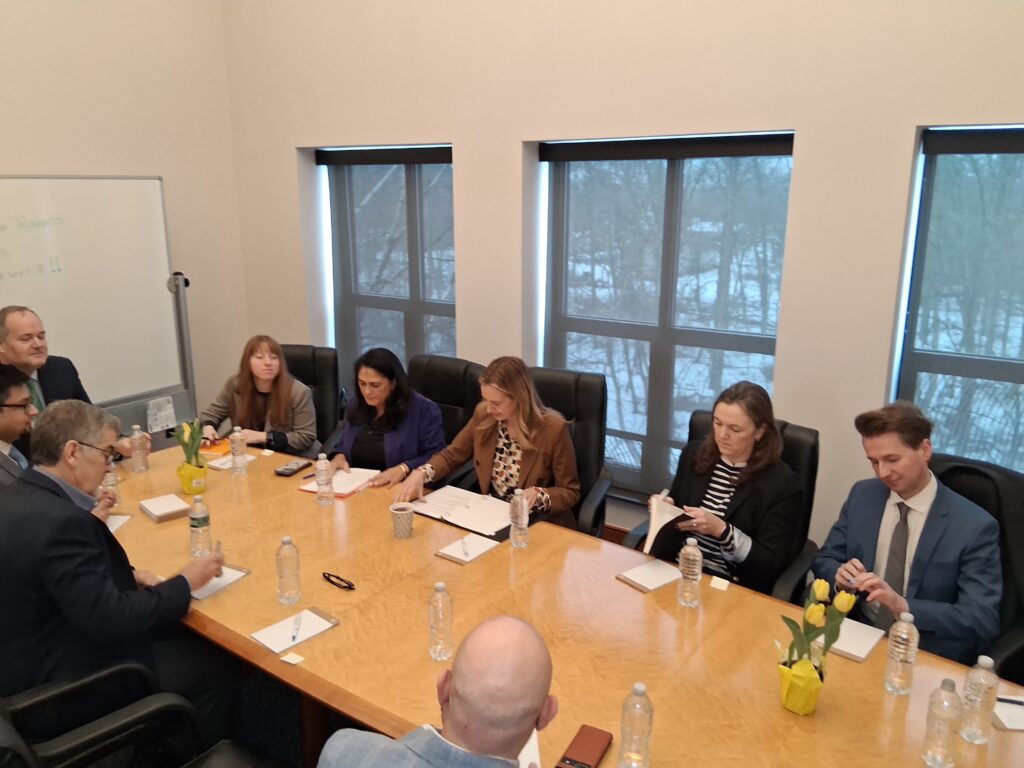
On background from a source familiar with Gov. Mikie Sherrill’s budget:
Gov. Sherrill today will introduce an "affordability budget that is both fiscally responsible and lays the foundation for our future – focused on lowering costs, investing in our kids, and making state government more accountable. Gov. Sherrill pledged to bring a different kind of leadership to Trenton, and her budget does just that."
KIDS ONLINE SAFETY AND MENTAL HEALTH
Governor Mikie Sherrill recognizes that protecting our kids is a public health priority that requires coordination across all agencies and systems. The Governor will continue fighting to keep kids safe online and expand mental health resources to support their overall well-being. This budget proposes an all-of-government approach to supporting youth mental health and aligns initiatives across the Department of Education and Department of Health to prioritize these efforts.
In the current fiscal year, the Department of Education is disbursing phone-free schools grants as it implements P.L.2025, c.195. The budget also includes funding for the Office of Youth Online Mental Health Safety and Awareness – established by Executive Order No. 6 in the Department of Health – and supports $500,000 for a new Social Media Research Center at one of New Jersey’s institutions of higher education to better understand the impact of online platforms on youth mental health.
The Governor’s budget also includes $33 million for a new youth mental health initiative. The Administration plans to sunset the New Jersey Statewide Student Support Services (NJ4S) program and re-invest those funds into high-acuity services through the Department of Education. As these services shift, the Governor expects close collaboration between departments to ensure the least disruptive experience possible for students and families. The FY 2027 budget launches SPARK (School-based Partnerships for Access and Resilience for Kids), a statewide initiative designed to expand mental health services in K-12 schools and improve coordination among school districts and providers. SPARK grants will support districts in building or expanding partnerships with licensed mental health providers to increase access to school-based counseling and intervention services. The initiative will establish clear pathways for students with high-acuity behavioral health needs and meet students where they are – directly in their schools – ensuring timely access to supports in a familiar and trusted environment. The program will prioritize high-need districts and require measurable performance benchmarks related to service utilization and student outcomes. Through SPARK, the Sherrill Administration will build a more coordinated and comprehensive school-based mental health system – one that focuses on prevention, resilience, and the provision of timely and high-quality care.
K-12 EDUCATION
Governor Sherrill proposes $12.4 billion for formula aid, the largest amount in state history, so that every child has access to a high-quality education that prepares them for success. This is a 3.1 percent increase over FY 2026. The budget also includes a record $1.4 billion for Preschool Education Aid, a nine percent increase over FY 2026, which will provide the nearly 300 districts with State-funded Pre-K with the resources they need.
--
The Governor is committed to ensuring that every child in New Jersey develops strong literacy and mathematics skills and has access to a world-class education. To continue building upon a solid foundation for long-term academic success, this budget expands investments in evidence-based learning supports that help students bolster academic skills and stay on track. This budget doubles last year's investment in high-impact tutoring to $15 million, supporting targeted instruction that provides students with frequent, small-group tutoring aligned with classroom learning.
Early results from high-impact tutoring initiatives across the state demonstrate measurable improvements in student outcomes. In Franklin Township Public Schools, students achieved two or more grade levels of growth in literacy scores and 83.2 percent of students improved more than one grade level in their mathematics program. Similarly, in Essex County, People’s Achieve Community Charter School’s third-grade mathematics program saw 13.7 percentage point increases year-over-year, representing the highest third-grade proficiency in the school’s history.
These results underscore the importance of targeted academic supports that accelerate learning and strengthen literacy development. By expanding high-impact tutoring, Governor Sherrill is investing in programs that produce measurable improvements in student achievement and ensuring that every child in New Jersey has the opportunity to succeed.
GOVERNMENT ACCOUNTABILITY
Under the Sherrill Administration, state agencies will have a customer service mindset and a focus on transparency and accountability – all with the shared goal of saving time and money for residents and businesses. Agencies will deliver faster and more convenient services for New Jerseyans, modernize outdated systems and processes, and reduce delays and costs within the permitting and licensing process.
The Governor has long prioritized innovation as a central strategy for improving how New Jersey delivers services and supports residents and businesses. Recently codified into law, the New Jersey Innovation Authority (NJIA) provides a permanent capability to modernize how residents and businesses interact with government. The FY 2027 budget increases NJIA funding by $13.3 million to ensure a stable foundation for this work and support the Governor’s efforts to improve customer experience, reduce administrative burdens, and make government more responsive and accountable.
Working in partnership with the newly established Chief Operating Officer (COO), NJIA will develop and implement the major initiatives created under Executive Order No. 5 to boost state agency effectiveness and transparency, including the Permitting Dashboard and New Jersey Report Card. Across agencies and departments, these initiatives will simplify processes, modernize outdated systems, and improve how residents and businesses engage with government programs.
The Permitting Dashboard will bring greater transparency and predictability to the permitting process by displaying the status of state permit applications so that applicants can see where their project is in the review process and agencies can identify and address bottlenecks that lead to approval delays. The Dashboard will also display the standardized permitting process across agencies and new permit timeframes, which will reduce delays and uncertainty within the project review and approval process. A faster and more predictable approval process will reduce housing and energy projects’ financing and construction costs, helping to improve affordability for families while accelerating project delivery and strengthening New Jersey’s economic competitiveness.
The New Jersey Report Card will be an interactive, public-facing online portal that provides information on the budget and state-funded programs to residents, with the goal of boosting public transparency and accountability regarding government spending and service delivery. This will make it easier for New Jerseyans to track spending, understand program outcomes, and evaluate how taxpayer dollars are delivering results in their communities.
UTILITY COSTS
The current cost of electricity has reached the point of crisis for so many New Jersey residents and families. Pursuant to Executive Order No. 1, the State is freezing rates by offsetting increases from the most recent electricity price auction. Because of efforts to rein in mismanagement by PJM, the regional grid operator, the recent state electricity price auction only yielded impacts of up to two percent. Without these efforts, rate hikes would have been comparable to last year’s and the cost for 67 million Americans would have been $27 billion.
Through off-budget funding sources, the Governor will shield New Jersey ratepayers from increases. Affordability is a top priority of the Governor, as is assisting households with the highest energy burdens. The Governor will support New Jersey programs that serve the most vulnerable, such as Comfort Partners and the Community Solar Energy Program.
Additionally, the Governor will direct the Board of Public Utilities to identify funds to issue another round of Residential Energy Assistance Payments (REAP) for lower-income residents and to provide further rate relief to customers as needed.
Expanding power generation is essential to lowering utility costs for New Jersey residents and businesses. Governor Sherrill is undertaking efforts to swiftly expand multiple programs to develop massive amounts of new power generation that secure reliability and create downward pressure on electricity prices. Solar, storage, energy efficiency, and demand response are some of the quickest and cheapest ways to get new electricity online. As such, the Governor is committed to prioritizing and accelerating timelines for programs such as the Garden State Energy Storage Program and Competitive Solar Incentive Program to alleviate the State’s supply shortage, as well as aggregate distributed energy resources into “virtual power plants” to further reduce peak demand, improve reliability, and lower costs.
Additionally, new baseload generation is critical to helping meet future growth. The Governor will leverage New Jersey’s unique attributes and partner with technology developers to show leadership on new clean energy generation that does not put undue burden on residents.
--
To achieve the government efficiency objectives in Executive Order No. 5, this budget addresses the understaffing of the permitting function at enables DEP and establishes two new regulatory review teams. These additional resources will focus on reducing permitting process backlogs and delays and will expedite and streamline project reviews for critical projects like energy generation, grid support, and new housing. Greater permitting capacity at DEP will reduce construction delays that add millions of dollars to the cost of power generation and housing projects, which will save New Jersey families’ money on their utility bills, mortgages, and rental payments. The Department of Environmental Protection is also actively participating in the cross-agency permitting dashboard work outlined in Executive Order No. 5 being led by the office of the COO and NJIA.
SMALL BUSINESS
The Sherrill Administration will prioritize small businesses and ensure that government supports their success, rather than get in the way. This budget maintains funding for the Main Street Recovery Fund. It also proposes cutting filing fees for corporations and non-profits.
As part of the Governor and Lieutenant Governor’s focus on turbocharging the Business Action Center (BAC), the budget supports additional employees to provide more comprehensive solutions to the State’s business community. The BAC is a critical institution for helping New Jerseyans to start their own business, navigate the permitting and licensing process, and access the capital needed to grow and expand. This new funding will allow the BAC to reach and support thousands of additional businesses, supercharging entrepreneurship, job creation, and innovation across New Jersey.
The 2024 New Jersey Disparity Study highlighted what so many business owners and residents know too well – the State’s procurement process does not provide adequate access or a level playing field for minority-, women-, and veteran-owned businesses. The Governor is committed to addressing these disparities, starting by investing $500,000 to strengthen state capacity by establishing a team of experts who can provide training and technical assistance to Minority and/or Women Business Enterprises (MWBE) navigating the State’s procurement and contracting process. This effort will improve bid readiness and expand access to state contracts and capital for MWBEs. The budget also maintains funding for the Small Business Bonding Readiness Assistance Fund and Wealth Disparities Initiatives.
VETERAN HOMELESSNESS
As the country’s first female veteran governor, Governor Sherrill will ensure a smooth transition for the State’s new Department of Veterans Affairs due to the enactment of P.L.2025, c.139 and is committed to expanding resources for veterans.
The groundwork has been laid to end veterans’ homelessness across New Jersey; however, there will be more work to be done to keep veterans’ homelessness to a functional zero. This budget builds on the existing Bringing Veterans Home infrastructure, which has successfully adopted strategies to transition homeless veterans from temporary housing placements to stable, permanent housing solutions. This budget includes $11 million for this initiative. Since its launch in January 2025, the program has helped over 2,200 homeless veterans. Without continued investment, New Jersey risks reversals in veteran housing gains and increased inflow of veterans entering homelessness. Governor Sherrill anticipates the Departments of Community Affairs and Veteran Affairs reaching all known homeless veterans this year.