
The Humans at Delaney Hall Deserved Dignity
BY GUY CITRON
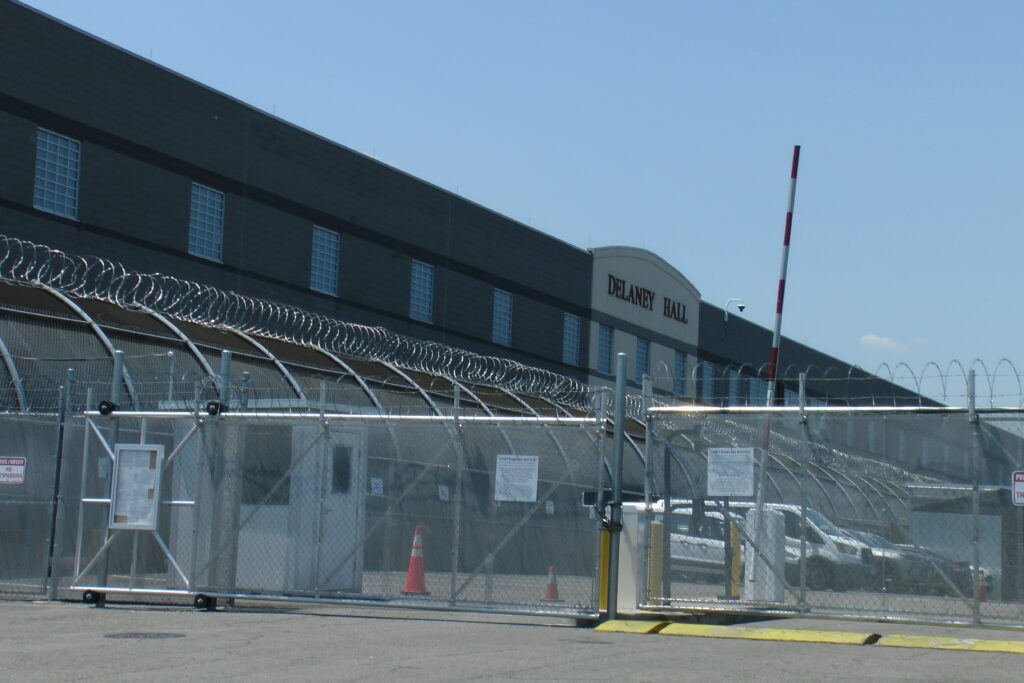
Sunday morning, I went back to Delaney Hall with a sign that said, "DUE PROCESS is everyone's RIGHT!"
There were the usual families and friends coming to visit loved ones inside. Volunteers were helping them deal with the visiting shifts. Helping hands gave visitors supplies, everything from water to diapers.
A distressed volunteer, who had just helped someone at the gate, came up to me, shrugging, saying the rules had changed again. "Sometimes, you just gotta rub the guards the right way," she muttered. I understood what she meant. Visitors have to learn how to deal with the GEO Group employees who control visitation. You have to be nice to them.
At one point, an elderly man approached me. He was wearing a fluorescent yellow visibility vest from his day job nearby and asked if my sign was about the Essex County Correctional Facility next door. He told me he had spent 28 years in the state prison system, including a significant amount of time right there beside Delaney Hall. I explained that I had come to raise awareness about due process and the treatment of immigrants caught up in our detention system.
He nodded in understanding. He told me that, in his experience, many people in prison were caught up in the system through association with others and over-policing. He went so far as to say that many of the young men he had known in prison had not really done anything wrong.
Later, another person approached me, a man originally from Guatemala now living in Brooklyn. He said he had "drank the Kool-Aid" and now realized he had made a mistake. I didn't ask him to explain further, but I understood him to mean that he had believed this administration would not target people unfairly for detention. He also told me that despite his love of soccer, he was refusing to watch the World Cup because he was concerned about FIFA's relationship with the White House. He thanked me for my courage. I told him to forgive himself.
Someone I knew from the demonstrations in Roxbury showed up, too. Her sign said: "THERE WILL BE TRIALS." I looked at hers, then back at mine. I remarked that our messages worked pretty well together. We simply stood there, on either side of the entrance, showing our signs to traffic throughout the morning. The occasional approving honks from cars and trucks broke the silence.
At one point, a bus full of detainees arrived. This transport was different from the smaller van-type buses I had seen before. It had tall, translucent windows, and through them we could make out the silhouettes of about half a dozen people. They appeared to be quite young.
I don't exactly know why it hit us all at once then. But the four or five of us standing there began crying. Audibly. I did my best to keep it together, and after a few deep breaths, I did. Watching a bus full of detained human beings pull into Delaney Hall just took the wind right out of me.
As the morning went on, reporters started arriving. One appeared to be from the local Spanish-language press; another was a camera crew from out of state. All the while across Doremus Avenue, a woman quietly beat a drum and chanted to herself. Small birds kept swooping down, landing here and there, and flying off again.
In the distance behind everything happening in front of me, I could see enormous American flags waving from buildings, construction sites, and iron bridges across the New Jersey Meadowlands.
Before I left, one of the volunteers took this picture of my friend and me holding our signs. I had noticed that he spent much of the morning picking up trash along the street in front of Delaney Hall.
"The visitors," he said, "deserved at least that dignity."