
The 2027 Budget and Christmas Tree Questions
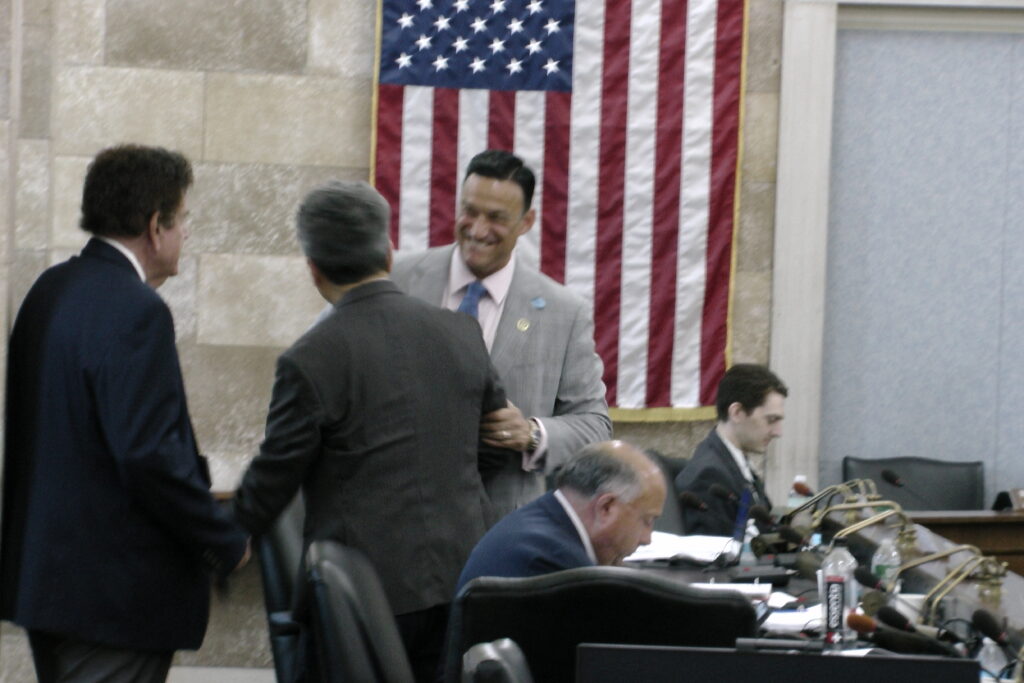
Republicans already are saying that the state's $60.7 billion budget is "being negotiated behind closed doors."
That's to be expected. Math is math and a party so deeply in the minority is not going to have much leverage.
But two other factors must be considered.
One is Mikie Sherrill's talk of "transparency."
Just about every governor talks about more openness, but it does not always come to pass.
But there's something else.
The difference between how the state puts together a budget and how everyone else does is striking.
By "everyone else," one means the hundreds and hundreds of municipal governing bodies and school boards across the state.
For these bodies, the routine is straightforward.
A budget is "introduced" and then it is published traditionally in a local newspaper, but more likely these days, online.
The entire budget, that is. So, anyone who cares about this stuff can read it and react.
After the publication of the budget, and after the required amount of time goes by, a public hearing is held. And then the budget is adopted.
But not before interested members of the public have their say.
There may indeed be criticism, but at least everyone knows the numbers.
With that backdrop, it truly is irresponsible how the state budget - a much more massive (obviously) document - becomes law.
The deadline is June 30 and we read Tuesday about the governor and legislative leaders reaching a deal.
It reportedly “provides tax relief to New Jerseyans who need it most while investing in our shared future with an expanded Child Tax Credit benefit for families. It offers the most property tax relief in the state's history, ensuring StayNJ is a sustainable benefit retirees can count on."
Not addressed at this time are the so-called Christmas Tree items. These are grants awarded to towns for an assortment of pet projects.
Sherrill had said back when the budget was introduced that she wanted to get rid of them. Many Democratic lawmakers didn't like that.
News reports suggest that the full budget may not be available until Friday, which would be less than a week prior to the June 30 deadline.
Contrast that with the practice of your local town council or school board introducing a budget, publishing it, and then voting on it a few weeks later.
State lawmakers, you see, have the luxury of doing whatever they want - unlike local officials who are bound by state law.
And the result this year is a $60 billion-plus spending plan for 2026-27 that is as of now unknown to the public.
There has to be a better way. But you get the feeling state leaders like things the way they are.