
2025 and Beyond: New Jersey as a Presidential Politics Destination
NEW BRUNSWICK - You'd probably have to go back to 1992 to find a presidential general election year in which New Jersey played a truly pivotal role. 2008 was big for New Jersey, too, in recent times, but as a primary election year, and on a different schedule than currently exists.
Now, as 2028 presidential hopefuls elbow their way in here to stand next to Mikie Sherrill, what happens in ten days will in part determine New Jersey's political role in the national strategy going forward.
General election battleground or cash cow?
2008 was interesting and exciting.
Those who were there remember sitting between Robert DeNiro and Barack Obama in the Meadowlands, then getting crammed in a diner with Chelsea Clinton.
It was the Democratic Primary.
Obama stunned Hillary Clinton in Iowa.
Then Clinton came roaring back in New Hampshire.
New Jersey- at that time scheduled in the winter not summer, and so relevant to the primary process - ended up being another early round in an old school, 15-round fight. Hillary Clinton would win here, but Obama showed more early tenacity in the Garden State, and the kind of grassroots heart that would ultimately propel him to victory.
Going further back in time, to 1992, following three wins in the 1980's by Republican Ronald Reagan (1980 and 1984), and Republican George Herbert Walker Bush (1988), Democrat Bill Clinton turned New Jersey blue by scratching out a very hard-fought win over then incumbent President Bush, 43-41%.
New Jersey went blue in every successive presidential general election year.
In the notable 2008 general election in New Jersey, Obama (due in next weekend for Sherrill, incidentally, and why not, given his history here) crushed the late John McCain, 57-42% (which was about what Obama racked against his next opponent, Mitt Romney, and what Joe Biden put up against Donald Trump in 2020).
Then last year happened.
Certainly, Trump's GOP allies see his 46-52% 2024 showing in a state he lost four years earlier, 41-57%, as a sign of New Jersey's creeping reemergence as a battle ground state, reasserted by the closeness of polls tracking the ongoing 2025 governor's race. They see - or want to see - New Jersey returning to at least the purple mood of 1992, when Bill Clinton and Bush spent their final days on the presidential campaign trail trying to win New Jersey. Bush's last stop on the trail, in fact, as he tried to keep the Ronald Reagan dream alive here, was Madison, Morris County, beside former Governor Tom Kean, Sr.
Democrats see complacency (Kamala Harris would win, anyway, and their attention on neighboring battleground Pennsylvania) contributing to last year's results. As she campaigns down the stretch of her campaign toward Nov. 4th, Sherrill keeps reminding voters that New Jersey (with a Democratic Party registration advantage of 850,000) "is not a red state. It's not a purple state. It's a blue state."
Diehard Dems, very jittery a month ago, hope Sherrill shows the flukiness of 2024 by decisively beating Ciattarelli. They know the stakes. Sherrill's surrogates continually talk about her future governorship - their words - as "a firewall" against Trump.
If Sherrill wins (and wins convincingly) her party's presidential hopefuls who traipse through here might not return for any general election rallies, like a Garden State-centric Bill Clinton in 1992. They would come back for big dollar donor backroom mixers, with New Jersey reverting to classic campaign piggy bank status. They would show up, perhaps, for primary rallies, like Clinton v. Obama, but only in the event of a late (not early, like 2008) attrition war among contenders. If Sherrill doesn't win, look not only for a grotesque endzone dance by the President, but a total rearrangement of the state politically.
Of course, party insiders could point to two terms of Democratic governance in Trenton - and the dogged unaffordability problems here - as the massive, overriding reasons (and identifiable pattern) for Ciattarelli winning, among other factors. Anymore missteps by Democrats going forward, in a Sherrill Administration, for example, could unleash an exodus. They're on notice, in short, the 2021 (when incumbent Democratic Governor Phil Murphy barely won reelection over Ciattarelli) and 2024 election results here signal.
Meanwhile, the combination of Trump overreach and fatigue, the fact that only two statewide elections dominate the national landscape (Virginia and New Jersey), the donor factor, the President killing his party here by announcing the "termination" of the Gateway Tunnel project, providing ample opportunities for Democrats to enliven Latino and African American turnout, and Sherrill repeatedly hitting 50% in polling, make NJ a no-brainer destination point for evolving Democratic contenders for the White House.
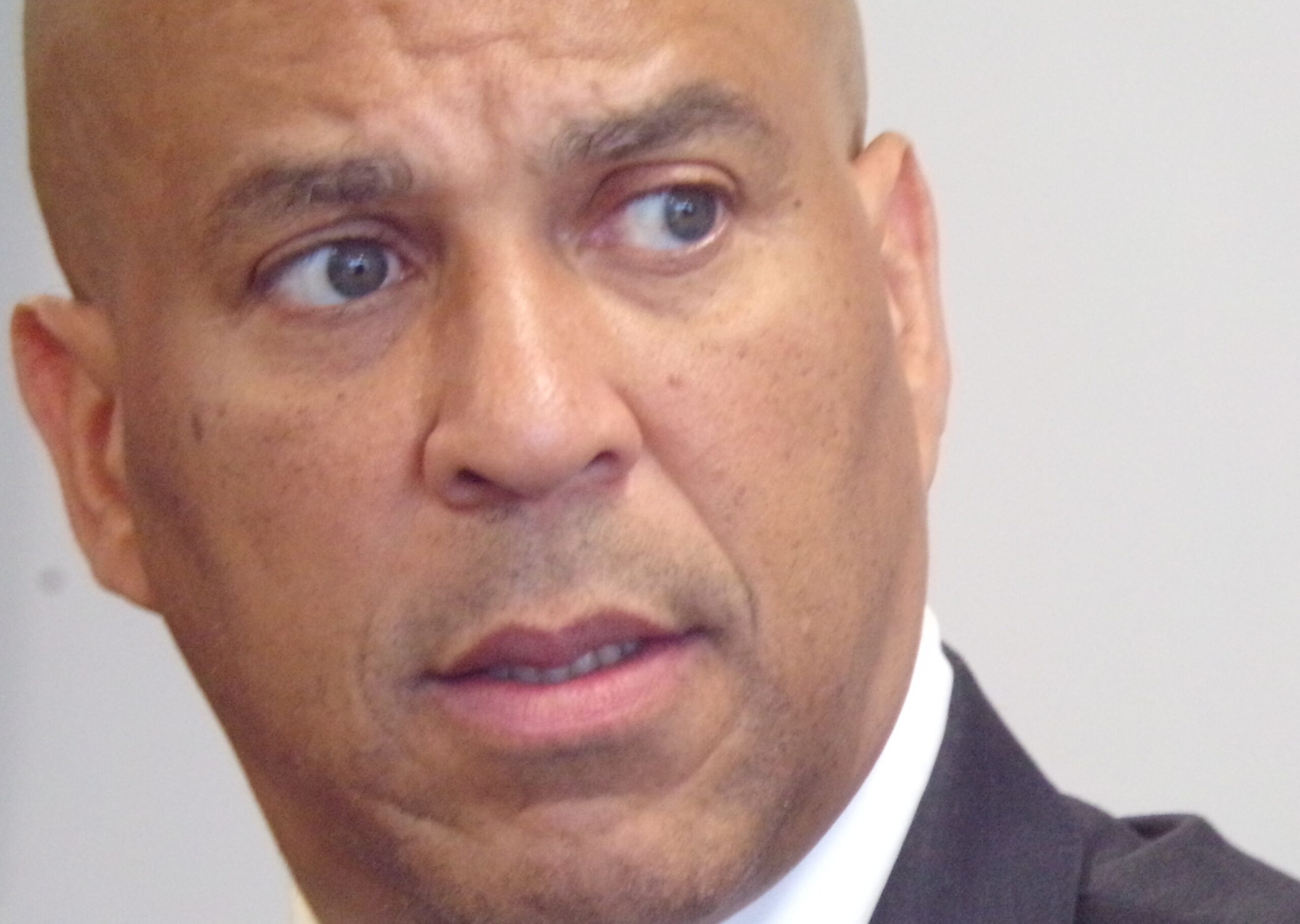
The stampede of presential hopefuls in his home state simultaneously reminds U.S. Senator Cory Booker (D-NJ) - pawing the turf of another national run - that he has company. A lot of it.
The latest?
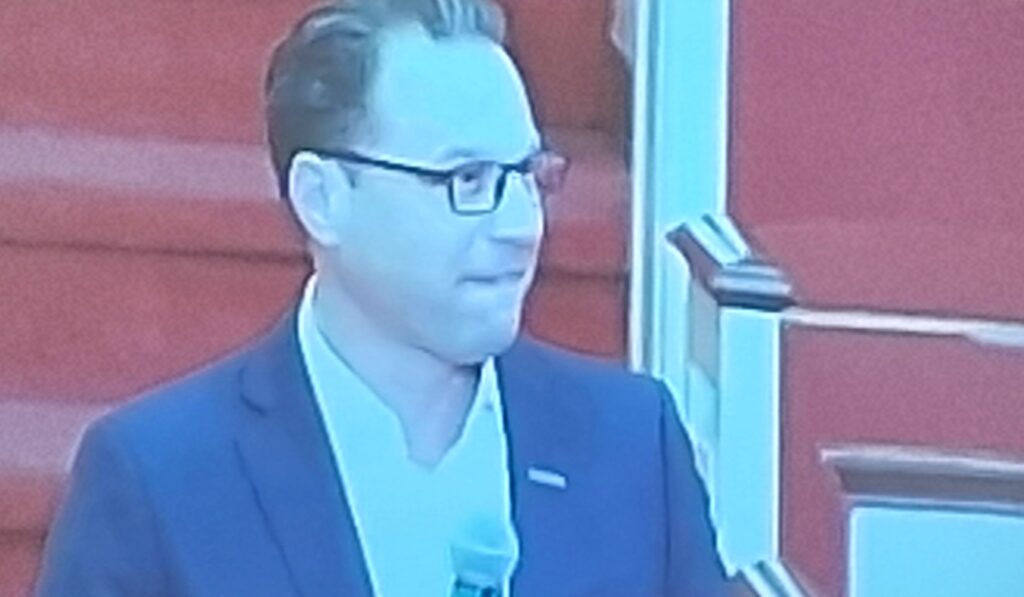
Pennsylvania Governor Josh Shapiro - popular leader of a true present-day battleground - (pictured, top) earlier today appeared to impress pastors and their allies in New Brunswick.
A couple of weeks ago, Maryland Governor Wes Moore - the war hero and Rhodes Scholar - hit the West Ward streets of Newark, on the same weekend that Sherrill also campaigned with (another battleground leader) Michigan Governor Gretchen Whitmer. Former Department of Transportation Secretary Pete Buttigieg will fundraise with Sherrill next week, and U.S. Senator Amy Klobuchar of Minnesota rallied with Sherrill in South Jersey earlier this month. Rahm Emanuel (Obamaworld) will come in, too.
So far, Californians Gavin Newsome - tough guy - and Kamala Harris have stayed in California.
Will New Jersey end up playing a bigger role than it has lately in deciding the next president?
Insiders consider the subject with increasing interest.
Not too many Democrats want to see Sherrill on a national ticket. They want her to stick around and solve some of the problems here. Then again, the intractability of the problems may require a quick escape route. A lot of cynical politics watchers are the same people who tell Chris Christie "I told you so," after the New Jersey Governor at full strength passed up the chance in 2012 to challenge Barack Obama, only to get ensnarled, and basically politically ruined, in Bridgegate. Christie, they say, could have been the second coming of Woodrow Wilson (three years as governor of NJ, before seizing on the moment, getting the hell out, and landing the presidency in 1912). If she can't leapfrog the aggressively growing field to become the nominee, maybe, Democrats say, she could pivot off of New Jersey's 2025 relevance, all the fixed eyeballs, and the tightening of the times, to complement the top of the Democratic ticket as a VP choice. Such an outcome would make New Jersey politically relevant in a presidential election year, not like 1992 or 2008, but in yet another way.
That, however, as they say, is a lifetime - and an election - away, as more 2028 hopefuls from the hinterlands mobilize at the Shore.
For more on presidential politics and New Jersey, please go HERE.
And HERE.