
Kim Outlines a New Approach to U.S. Competitiveness and Pragmatic Competition with China
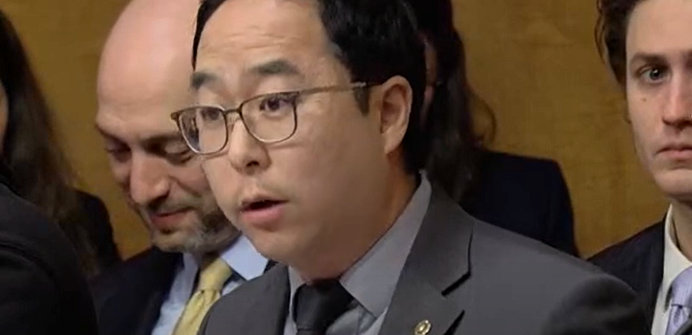
Last week, Senator Andy Kim (D-N.J.) delivered remarks at the Harvard Kennedy School Institute of Politics as part of the John F. Kennedy Jr. Forum, outlining his vision for U.S. competitiveness and pragmatic competition with China focused on delivering opportunity for all Americans. Senator Kim spoke about how acting pragmatically – to reduce vulnerabilities and manage threats while playing to America’s strengths – can shape our relationship with China, maintain our lead on next generation technologies, and build coalitions that provide security and stability.
“If we do work to meet this moment with purpose, I truly believe that this can be a moment of change. Where we can move to an era of opportunity, not anxiety, and be able to provide my kids and you and your families the kind of opportunity and the kind of stability that you deserve,” said Senator Kim.
WATCH SENATOR KIM’S FULL REMARKS AND Q&A
(Read Senator Kim’s remarks as delivered)
Key Pillars of Senator Kim’s Vision for the Future of U.S. - China Relations
- Shaping our Relationship with China – Pragmatic policies can secure the United States’ competitive edge against China, while deterring potentially devastating conflict.
“I refuse to believe that the only policy options towards China and global competitiveness are binary. That it's either the saber rattling or turning the blind eye. And if we are to pursue opportunity in this nation, for our future, we need to move past the incoherence of the present and build a future with focus grounded in honest assessments, not wishful thinking or fear mongering.”
To maximize opportunity for the American the people, Senator Kim outlines that the United States must:
- Reduce vulnerabilities and manage threats in order to inhabit the world together and avoid destabilizing competition leading to conflict;
- decide when and where it is imperative for the U.S. to compete vigorously, and not overextend ourselves by engaging in competition for competition’s sake;
- take China's threats to American economic, security, and ability to create opportunity seriously, from Chinese parts powering Russian drones to China resuming its aggressive island building campaign in the South China Sea.
Senator Kim continues: “A successful approach on China does not mean turning a blind eye or minimizing these harmful actions. Instead, it demands concerted strategy to reduce our vulnerabilities while engaging China to reduce the risks of mistakes, misunderstandings, and miscalculations.”
- Maintaining our Edge on Next Generation Technologies – A comprehensive framework is necessary to take control of emerging technologies and protect the United States’ strategic advantages.
“Transformative technologies like AI have the power to alter every aspect of our society, and it's critical that the American people are in the driver's seat of shaping what that change looks like. Our government has been slow to recognize and adapt to these changes, but in order to position America for success in this competitive moment, we must decide how and where to lead and work alongside like-minded partners to build the future we want to see.”
Senator Kim defends how the United States must:
- Maintain our lead in AI innovation by strengthening our export controls and anti-distillation framework and safeguard America’s manufacturing and innovation edge, especially when it comes to advanced chips and chip manufacturing; and
- provide clear messaging to China about AI, bioweapons, and other topics to ensure that it is clear on the United States’ perceptions and intentions, while attempting to build a platform for more robust dialogue.
- Building Coalitions that Provide Security and Stability – The United States must update its alliances and partnerships to meet the needs of the 21st century with a focus on collective economic and technological opportunity, not just security and military deterrence.
“If we want to regain trust and build depth and power in the kind of alliances and partnerships that have been core to America's strength for generations, we need to rethink them for this moment. We need to recognize that our relationships will look different than before and embrace areas where we can no longer just work together with our allies in power and partners, but we need to empower them now to lead.”
In contrast to the Trump administration’s America-alone policies, Senator Kim outlines how America can build stability globally and best position itself for success by working alongside like-minded partners, including by:
- Stopping wars of choice that are self-inflicted wounds, draining resources and global credibility;
- Working with allies and partners to safeguard critical mineral supply chains and reduce vulnerabilities to economic shocks;
- Forging stronger partnerships through East Asia, Southeast Asia, South Asia; with Japan and South Korea nations across the Indo Pacific; and
- Maintaining peace and stability across the Taiwan strait.
- Taking a Focused Approach to Ensure Americans' Security and Prosperity – We should focus on factors we can control and take immediate action, including growing a world class workforce by investing in education or attracting global talent and building them a path for opportunity in the United States.
“We must be grounded in reality, as we don't have the capacity to dominate every industry, field, and sector. Nor should we strive for it. In fact, there are places where we should avoid overextending ourselves and draining resources. What we decide to focus on must be strategically chosen; rooted in areas that benefit the American people, protect their security, prosperity, and way of life; and be backed by resource investments and structural focus.”
Senator Kim’s remarks build on his work to strengthen American foreign policy in the face of global competition and change, and to build a path toward opportunity. Read more about Senator Kim’s foreign policy agenda.