A Plea to Governor Sherrill: As Health Benefit Costs Soar, New Jersey's Municipalities Are Running Out of Levers to Pull

As health insurance costs soar and municipal revenues remain stagnant, restoring energy tax receipts offers the State Government an opportunity to provide meaningful property tax relief before local budgets reach a breaking point.
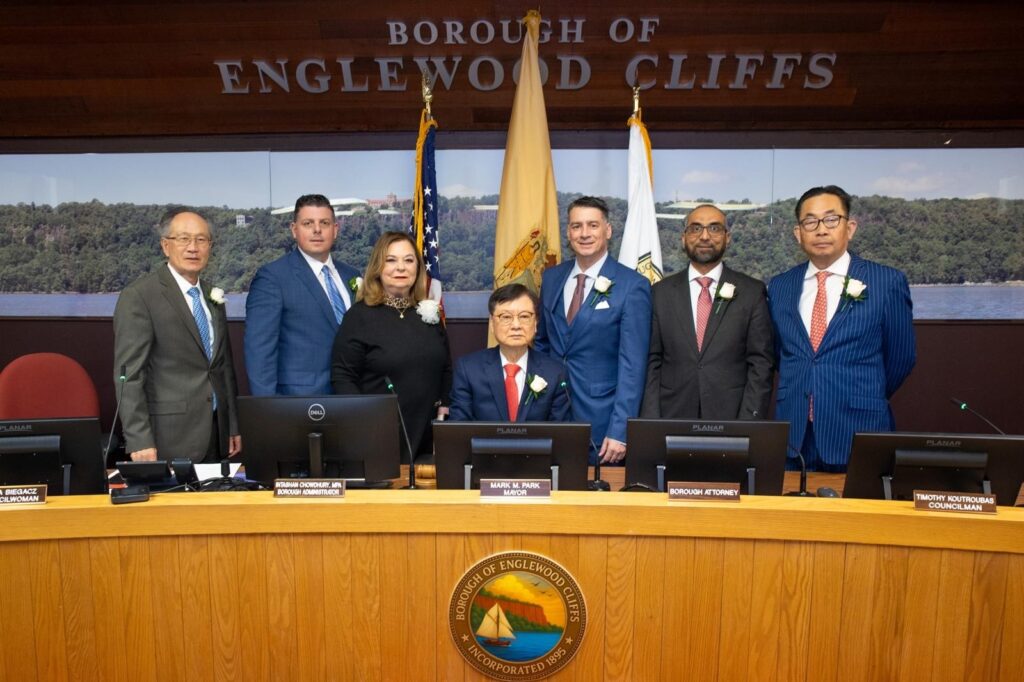
By Intashan Chowdhury, MPA Borough Administrator, Borough of Englewood Cliffs, New Jersey
In municipal government, every financial decision has a consequence. Increase spending in one area, and another must adjust. Delay an infrastructure improvement, and the cost of addressing it later may grow. Absorb an unexpected expense, and resources intended for other priorities inevitably diminish.
Municipal budgets are interconnected systems. Pull one lever, and another moves. When the pressures become too great, the consequences eventually reach the people local government exists to serve.
Today, New Jersey's 564 municipalities are confronting precisely that challenge.
As the State Health Benefits Program (SHBP) faces escalating premiums, declining participation, and serious questions about its long-term sustainability, local governments are being asked to absorb costs that increasingly outpace their financial capacity. Meanwhile, longstanding reductions to municipal Energy Tax Receipts Property Tax Relief Aid and related municipal assistance have never been fully addressed through a permanent restoration of historical funding levels.
These are often treated as separate policy discussions. They should not be.
Governor Mikie Sherrill's administration has an opportunity to confront both issues together, recognizing that the financial stability of local government is inseparable from the affordability of government itself.
A Promise to Municipalities That Remains Unfulfilled
Historically, New Jersey municipalities received revenues associated with public utility gross receipts and franchise taxes. These revenues were tied to utilities operating within municipal boundaries and the use of public rights-of-way.
When the State assumed responsibility for collecting these taxes in 1980, the resulting system preserved a significant source of municipal revenue through state-administered distributions.
Over time, however, changes in state budgetary policy and distribution formulas reduced the revenues available to local governments. What had originated as a locally derived revenue source increasingly became treated as state aid subject to annual budgetary decisions.
The New Jersey State League of Municipalities has spent years advocating for restoration, maintaining that these funds were historically intended to support municipal services and provide local property tax relief.
During fiscal years 2009, 2010, and 2011, amid the financial pressures of the Great Recession, approximately $330 million in combined Energy Tax Receipts Property Tax Relief Aid (ETR) and Consolidated Municipal Property Tax Relief Aid (CMPTRA) was reduced.
According to the nonpartisan New Jersey Office of Legislative Services, legislation introduced to restore those reductions would have provided municipalities approximately $330.1 million in additional annual revenue once fully implemented.
Source: New Jersey Office of Legislative Services, Senate Bill 330 Fiscal Estimate
This was not a temporary inconvenience that resolved itself when the economy recovered. The reductions became part of the financial baseline against which municipalities have been forced to operate.
Although the State has provided supplemental municipal relief funding in certain budget years, the underlying issue has never been comprehensively resolved.
In fact, the fiscal year 2027 State budget maintains approximately $1.455 billion in combined ETR and CMPTRA-related funding, essentially unchanged from fiscal year 2026.
Source: New Jersey State League of Municipalities, FY2027 State Budget Update
Consider what restoring approximately $330 million in annual municipal revenue could mean.
For a financially distressed community, that funding could help maintain staffing, preserve essential services, or offset a significant portion of rising employee benefit obligations.
For another municipality, it could reduce reliance on property taxes or free resources for infrastructure improvements that have been postponed for years.
These are not insignificant sums. They represent recurring financial capacity that municipalities have been missing for more than a decade.
And the need for that capacity has arguably never been greater.
The Health Benefits Crisis Is Becoming Unsustainable
The State Health Benefits Program was intended to provide public employers and employees with access to comprehensive health coverage through a large, pooled purchasing arrangement.
For many years, municipalities relied on that structure to deliver competitive benefits while managing costs.
But the financial environment has changed dramatically.
On September 3, 2026, the State Health Benefits Commission adopted premium increases for plan year 2027 of 17.3 percent for active local government employees, 36.5 percent for early retirees, and 19.3 percent for Medicare retirees.
Certain plan designs face even more extraordinary increases. The HDHigh plan, for example, was projected to experience a 71.8 percent increase in the State's actuarial analysis.
These figures should concern every municipal official, public employee, and property taxpayer in New Jersey.
Consider a municipality spending $3 million annually on employee health insurance. A hypothetical 17.3 percent increase across that entire expense would create approximately $519,000 in additional annual costs.
That is more than half a million dollars before accounting for contractual salary obligations, pension contributions, public safety needs, road maintenance, stormwater improvements, or any other essential municipal function.
Municipalities operate within stringent property tax levy limitations and must balance their budgets annually.
They cannot simply defer every obligation or assume that new revenue will materialize.
The money must come from somewhere.
And when health insurance expenses increase by hundreds of thousands, or potentially millions, of dollars, municipal officials are left searching for another lever to pull.
A System Losing the Very Participants It Needs
The situation becomes even more troubling when considering the growing number of municipalities leaving the SHBP.
Local governments are exploring private insurance arrangements and health insurance funds in search of greater cost stability. These decisions are not necessarily driven by a desire to abandon the State's program. They reflect a responsibility to protect municipal finances while maintaining appropriate employee coverage.
Yet those departures create additional challenges for the remaining participants.
The State's actuaries have identified adverse selection, including the migration of employers to alternative insurance arrangements, as one factor contributing to rising premiums.
Source: New Jersey State League of Municipalities, 2027 SHBC Rate Renewal Meeting
This is the domino effect in action.
Municipalities leave because costs become difficult to sustain. The composition of the remaining insurance pool changes, potentially increasing costs for those who stay. Those higher costs encourage additional municipalities to evaluate their options.
At what point does this cycle become impossible to reverse?
It is encouraging that the State has undertaken actuarial reviews, convened stakeholders, and explored plan-design changes intended to address these challenges.
Those efforts are necessary and should continue.
But studies and committees do not stop the municipal budget calendar.
The 2027 rates have already been adopted. Planning for 2028 will follow, and local governments must make decisions today based on obligations they cannot postpone.
Time is no longer a luxury.
If the State is unable to stabilize the program quickly enough, municipalities will continue facing difficult financial choices regardless of how promising future reforms may appear.
That is precisely why restoring historically reduced municipal revenues has become more urgent.
Restoring Revenue Is Not a Substitute for Reform
To be clear, restoring energy tax receipts and related municipal aid will not fix the underlying financial problems confronting the SHBP.
It will not independently control prescription drug costs, eliminate adverse selection, rebuild reserves, or resolve every structural concern associated with the program.
Those challenges require comprehensive reform and sustained collaboration among the State, public employers, employees, organized labor, and other stakeholders.
But restoring municipal revenue would provide something equally important: financial breathing room.
Municipalities need the ability to manage immediate cost pressures while longer-term solutions are developed.
The State cannot reasonably expect local governments to absorb extraordinary increases indefinitely while simultaneously maintaining a funding structure that has failed to fully restore revenues historically intended for them.
This is not an argument for additional spending without accountability. It is an argument for recognizing the financial relationship between the State and the municipalities responsible for delivering services to millions of New Jersey residents.
Even Fiscally Responsible Communities Have Limits
In Englewood Cliffs, where I serve as Borough Administrator, we have demonstrated that fiscal discipline and continued investment in public services can coexist.
Through careful financial management and the commitment of our Mayor, Borough Council, and municipal professionals, we have adopted consecutive municipal budgets without increasing the municipal tax levy.
At the same time, we have continued making significant investments in infrastructure, public safety, parks, technology, and other services that directly benefit our residents.
These achievements reflect deliberate planning, difficult decisions, and an understanding that every taxpayer dollar carries a responsibility.
But even municipalities that have successfully navigated today's financial environment cannot assume that rising costs will remain manageable forever.
There are limits to operational efficiencies. There are limits to expenditure reductions. And there are limits to how much financial pressure can be absorbed without eventually affecting services, employees, or taxpayers.
Now consider municipalities that do not have the same financial flexibility.
Communities with limited tax bases, aging infrastructure, significant fixed costs, or longstanding fiscal challenges may have far fewer options.
For those communities, a substantial health insurance increase may mean more than postponing a capital improvement. It may mean reducing services, leaving positions vacant, increasing employee cost-sharing where legally permissible, or asking property taxpayers to shoulder an additional burden.
These are not abstract policy consequences. They are the difficult choices municipal administrators, finance officers, and governing bodies must confront.
And the residents who can least afford additional financial pressure are often the ones most affected.
An Opportunity for the Sherrill Administration
Governor Sherrill has inherited a complex fiscal environment, and no administration can reasonably be expected to resolve decades of municipal funding challenges overnight.
Nevertheless, this moment presents an opportunity to establish a more sustainable relationship between the State and its municipalities.
A meaningful first step would be a clear commitment to restoring approximately $330 million in historically reduced ETR and CMPTRA funding through a predictable, recurring funding plan.
The Legislature has previously considered phased restoration proposals. The Office of Legislative Services has quantified their financial impact, and the League of Municipalities has consistently advocated for returning these resources.
The framework for action is not entirely new.
What is needed is renewed urgency and a commitment to implementation.
The administration should also pursue structural SHBP reforms with measurable objectives, transparent financial reporting, and meaningful participation from municipal employers and employee representatives.
These efforts should not be viewed as competing priorities.
One addresses the financial pressures being placed on municipal budgets. The other addresses a major driver of those pressures.
Both are necessary.
And while full restoration would require difficult decisions within the State budget, continuing to defer the issue carries costs of its own.
The question should not be whether New Jersey can afford to return these revenues to municipalities.
It should also be whether New Jersey can afford the long-term consequences of failing to do so.
The Taxpayer Is the Last Domino
Municipal government is often described as the level of government closest to the people. That proximity is not merely geographic. It is financial.
When a municipal budget becomes strained, the consequences are felt directly in neighborhoods, public facilities, local services, and household finances.
Every additional dollar spent on an unavoidable obligation is a dollar that cannot be spent elsewhere unless new revenue is found.
Every revenue source that remains stagnant places greater pressure on those that remain.
And every year that passes without addressing these structural challenges makes the next budget more difficult than the last.
New Jersey's municipalities are not asking to be excused from their responsibility to manage public resources prudently.
They are asking for the tools and financial resources necessary to fulfill that responsibility.
Governor Sherrill and the Legislature have an opportunity to demonstrate that property tax relief begins not only with direct assistance to residents, but also with strengthening the fiscal foundation of the local governments serving them.
Restoring energy tax receipts and related municipal aid will not solve every financial challenge. Nor will it eliminate the need for urgent health benefits reform.
But it can help prevent one growing fiscal problem from triggering another.
For decades, municipal leaders have been finding ways to stretch resources, control expenditures, and maintain services despite increasing financial constraints.
They will continue to do so.
But there comes a point when there are simply no more levers left to pull.
And when that happens, the last domino to fall is the taxpayer.