
Treasurer Binder Testifies Before Assembly Budget Committee on Proposed FY 2027 Budget
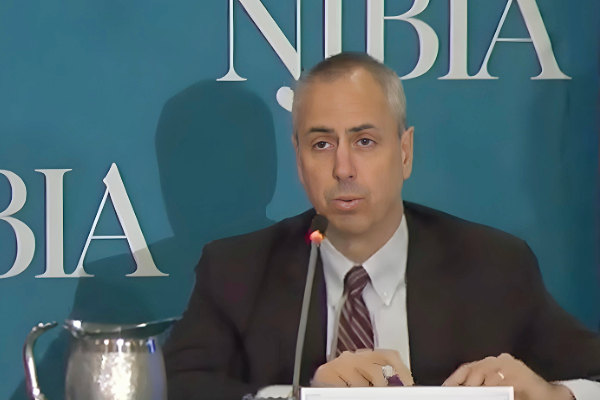
Treasurer Binder Testifies Before Assembly Budget Committee on Proposed FY 2027 Budget
(TRENTON) - State Treasurer Aaron Binder and Department of the Treasury officials testified before the Assembly Budget Committee at the State House today, providing a detailed update on revenue projections for the remainder of Fiscal Year 2026 through Fiscal Year 2027.
The following is a copy of the testimony, as prepared for delivery:
Treasurer Aaron Binder Testimony
Assembly Budget Committee
April 6, 2025
Good morning, Chairwoman Pintor-Marin, Vice Chairwoman Park, and distinguished members of the Committee. It’s my pleasure to come before you today to discuss Governor Mikie Sherrill’s FY 2027 budget.
This is my first time appearing before you as State Treasurer and I am honored to represent Governor Sherrill and discuss her FY 2027 budget proposal. Under her leadership, we’ve proposed a fiscally responsible budget that focuses on meeting the needs of New Jerseyans. I look forward to working with all of you in the coming weeks to ensure we deliver a budget that demonstrates those values. I would like to begin by introducing my colleagues seated with me today –Acting Director of the Office of Management and Budget (OMB) Tariq Shabazz, Deputy Treasurer Kavin Mistry, and the Director of our Office of Revenue and Economic Analysis (OREA), Martin Poethke.
This group, along with Treasury’s front office and the staffs of OMB, OREA, and a number of other divisions, worked collaboratively and in partnership with Governor Sherrill’s office, and did an extraordinary job preparing this budget for introduction in just over six weeks. Crafting a budget in a transition year is never an easy task given the changing staff and significantly shortened timeframe, and this year was no exception, particularly as we face some serious fiscal challenges. This team put forth a monumental effort to get the job done and I would like to personally thank each and every one of them for the professionalism, dedication and expertise they displayed throughout.
This is the first budget of the Sherrill Administration and represents not just a plan for the operation of state government, but also a statement of values. With this budget Governor Sherrill has signaled her intent to bring state spending in line with revenue, while making state government as accountable, as efficient, and as transparent as possible and investing in key priorities to make New Jersey more affordable.
With those goals in mind, this budget requires some very tough choices.
In February, Governor Sherrill outlined the challenges we faced as we initially stared down a $3 billion structural deficit, one that will continue to grow if not addressed with long-term, sustainable solutions.
No single factor contributed to the structural deficit. Rather it’s the result of an accumulation of issues, some of them dating back decades.
First is the projected budgetary growth in critical areas, much of it mandatory. Current projections include significant growth in Medicaid, school funding, public employee salaries and health benefits, and direct property tax relief.
Second is a problem that has plagued state budgets since long before most of us joined state government. We continue to pay the price for decisions made in the past – by both parties. One example is the pension payment - the full pension payment in FY 2027 will be approximately $7.3 billion. If payments had been consistently made by previous administrations, the full payment this year would be just over $1 billion, which means the proposed budget essentially includes a $6 billion penalty for the decisions made in the past.
Another important example of past decisions impacting the proposed budget is the pension bonds. The debt service schedule for FY 2027 includes over $500 million for repayment of pension bonds issued in 1997. The last payment on these bonds won’t be made until Governor Sherrill’s third budget in FY 2029 – more than three decades after they were issued.
Third is action at the federal level. H.R. 1 will add over $100 million to this year’s budget and many of the deeper cuts, including those to our state’s healthcare system, loom on the horizon in 2027 and beyond.
The final point I’ll make on the structural deficit, and our approach to solving it in this budget, is simply that solutions used to shore up the budget in the past are not available to us anymore. Our federal Covid stimulus funds are exhausted, the debt defeasance and prevention fund has been fully allocated, and many of the other one-time solutions have been exhausted. The reliance on non-recurring revenue is simply not a viable option and is not a solution to fixing the structural deficit.
In order to close the gap, we need to focus on finding ways to run government more efficiently and effectively while looking carefully at ways to reduce costs and raise revenue without unduly burdening our taxpayers or straying from a path of fiscal responsibility.
To be clear, there is still much work to be done together, but this budget goes a long way toward achieving those goals.
As I mentioned earlier, Governor Sherrill has prioritized fiscal accountability and transparency and that means avoiding the mistakes of the past by funding all of our current obligations.
To that end, the proposed budget fully funds the pension system with a $7.3 billion dollar contribution. This marks the sixth consecutive year the state has fully funded the pension system – proof that we can do hard things when there’s a will. To put that number in context and illustrate the breadth of past neglect, this one-year contribution is already more than the total combined contributions of former Governors Whitman, DiFrancesco, McGreevey, Codey, and Corzine.
I want to thank legislative leadership and all of our partners in the legislature for your continued commitment to tackling this issue. The steps taken in recent years have been monumental, but we cannot afford to backslide. Currently, the funded ratio for State pension’s funds is just below 56 percent. This means if we continue to make the full pension payment, it will still take us until FY 2042 before we reach the target of 80 percent and until approximately FY 2056 until we reach 100 percent funding.
Although there are many more years of work ahead, making these full pension payments puts us on path to eventually achieve full funding and ensure the State is able to meet the commitment made to people who worked a lifetime.
Additionally, Governor Sherrill’s proposed budget reflects her commitment to ensuring our education system remains one of the best in the nation. In order to maintain that standard of excellence, the proposed FY 2027 budget includes a record $12.4 billion in K through 12 school aid, a more than $370 million increase from last fiscal year and the highest total direct aid in State history, although as we are all aware, we are not getting the best bang for our buck on this investment.
It also includes a record $1.4 billion for Preschool Education Aid to continue toward the goal of providing preschool to all. And it doubles the amount allocated to high impact tutoring to $15 million with the goal of accelerating learning and addressing academic achievement gaps exacerbated by the pandemic.
As we make the hard choices necessary to close the budget gap, we must also be mindful that the easy way is rarely the best way. Simply spending down the surplus to close that gap is a short-term patch at best and a luxury we can no longer afford. With that in mind, this budget proposes a surplus of $5.4 billion or roughly 9 percent of the total budget. While this towers over the State’s surplus a decade ago, it’s also roughly half the surplus from just three years ago.
Rather than depleting the surplus to a dangerous level, this budget proposes almost $2 billion in spending cuts and largely caps discretionary spending to close the structural gap. As we are all aware, reductions in spending often represent tough but necessary choices as there are hundreds of worthy programs vying for limited state dollars.
Another important item I’d like to mention today is the more than $20 million investment into the New Jersey Innovation Authority to increase government transparency and efficiency, including support for efforts to modernize permitting and systems to maximize eligibility of New Jersey residents for federal programs. During her campaign, Governor Sherrill promised to streamline the State’s permitting process. Among the projects to be completed are a permitting dashboard, which will allow businesses to track their applications, and a New Jersey Report Card, which will allow residents to track state spending.
Before we move to the revenue update, I’d like to touch briefly on two major drivers of State spending.
The first is public employee health benefits programs.
While we won’t have the final numbers until early July, based on the mid-year reports that were published last week, cost and utilization trends for the State Health Benefits Plan and the School Employee Health Benefit Plan indicate that those plans will once again see double digit premium rate increases for plan year 2027.
We also don’t know the exact magnitude of the increases for the SHBP Local Government plan, but what we do know, based on the plan actuary’s midyear reports and SHBP Local Government fund levels, is that rate increases could be as high as the rate increases we experienced last year.
These annual double-digit increases are threatening the fiscal health of all levels of government. Something must be done, and urgently.
Governor Sherrill’s proposals for $75 million in cost savings at the state level and $150 million in the local government plan are the right start. But this issue will not be resolved overnight. Because the root causes are structural and complex, this problem can only be addressed through a comprehensive solution.
As you know, Chapter 78, passed in 2011, created a Plan Design Committee for the SHBP with sole authority over the design of our healthcare plans. Per Chapter 78, the SHBP Plan Design Committee consists of twelve members: six from the State and six from the State and local public employee unions.
Chapter 78 requires seven yes votes to approve anything and if there is a six-six tie it goes to a non-binding dispute resolution process. This governance structure has resulted in virtually permanent gridlock, which has prevented any nimble responsiveness in the face of rising costs.
Since 2011 and to date, the Plan Design Committee process has resulted in almost no significant cost savings.
We recognize that there are no easy solutions and we are committed to working with the Legislature towards a solution that protects both taxpayers and our hardworking public employees.
A second major driver of State spending is Direct Property Tax Relief.
The proposed budget recommends changes to Stay NJ that are necessary to reduce the structural deficit and to move us toward the legislative mandate that conditions full implementation of Stay NJ on a 12 percent projected budget surplus.
The Governor proposes reducing the income limit from $500,000 to $250,000, bringing it in line with the ANCHOR program. Additionally, the benefit would be capped at $4,000, down from $6,500 in the original law.
These changes ensure that almost 90 percent of current Stay NJ recipients will still receive it, while saving taxpayers hundreds of millions of dollars in the next fiscal year. Even with these changes, the budget allocates nearly $700 million to fund this important program and will allow us to provide significant relief while helping to ensure the long-term viability of the program.
In total, the budget allocates a record $4.2 billion for property tax relief, including $2.3 billion for the popular ANCHOR program and $350 million for Senior Freeze, in addition to the nearly $700 million I’ve already mentioned for Stay NJ. The Governor also proposes maintaining an ANCHOR bonus for more than 100,000 senior tenants, which was originally set to expire in FY 2027. Again, this proposed budget provides the most property tax relief in history.
More than two million households have taken advantage of at least one of our major property tax relief programs and many qualify for all three. This is critical assistance going to the residents of our State who need it most.
Now that I’ve outlined some of the key components of this budget, I’ll turn to the revenue update.
The following table outlines the Governor’s budget proposal:
State revenues are projected to grow from a revised $57.5 billion in FY 2026 to $59.1 billion in FY 2027. That is an increase of just under $1.6 billion, or about 2.7 percent.
On the spending side, total appropriations are expected to rise by only $980 million, from $59.7 billion in the adjusted FY 2026 appropriation to $60.7 billion proposed for FY 2027. That is a modest increase of only 1.6 percent. As a point of comparison, the last eight budgets under the prior administration grew by an average of 6.8% annually.
The State is projected to end FY 2027 with a $5.4 billion surplus, equal to 8.8 percent of appropriations. By historical standards, this is a responsible surplus. It is, however, lower than the $7.3 billion surplus in FY 2026 and continues a downward trend over the past several years. Without a shared commitment to reduce, and ultimately eliminate, the structural deficit, the surplus will disappear in the next few years, forcing us to consider extreme spending cuts.
That is why the Sherrill Administration is committed to eliminating the structural deficit. In this budget, we have proposed cutting this structural deficit nearly in half, from over $3.0 billion to approximately $1.6 billion in the proposed FY 2027 Budget. We are committed to working with the Legislature to continue finding workable solutions to address this deficit.
This task of tackling the structural deficit is made even more challenging by the growing uncertainty across the globe. Most major economic indicators slowed in 2025. U.S. job figures declined in February. Federal tariff and trade policies have fueled market volatility and weakened consumer confidence. And the U.S. war in Iran has severely disrupted oil markets and added to global instability. The global economy has changed sharply from where things stood just a few short weeks ago, when our initial revenue projections were finalized—making it all the more imperative that we continue to work to shrink the deficit and safeguard our surplus.
This uncertainty further underscores our responsibility to budget prudently.
I’ll turn now to the updated forecast.
For FY 2026, we have increased the overall forecast slightly by $181 million, or 0.3 percent. That brings us almost exactly in line with the forecast adopted in the FY 2026 Appropriations Act.
The key points for FY 2026 are as follows:
- The Gross Income Tax (GIT) is now estimated at $22.5 billion, $974 million higher than before.
- The Sales Tax estimate remains unchanged at $14.2 billion.
- The Corporation Business Tax (CBT) estimate has been reduced by $884 million, to $3.3 billion. The Corporate Transit Fee (CTF) estimate has also been reduced by $185 million dollars, to $654 million.
- The Pass-Through Business Alternative Income Tax (PTBAIT) estimate is up $356 million, to $4.8 billion.
In short, the drop in corporate tax revenues has been offset by stronger‑than‑expected growth in the GIT and PTBAIT. Much of that strength comes from a third straight year of strong U.S. stock‑market performance. From the end of 2022 to the end of 2025, the S&P 500 rose by 78.3 percent. By contrast, the weakness in corporate tax revenues is driven by changes in federal corporate tax law and a surge in refund activity, due in part to economic development tax credits, which I will discuss in more detail momentarily.
Withholding from employee wages is up about 6 percent, and collections over the past few months point to a healthy bonus season on Wall Street. Estimated payments are up more than 20 percent so far this fiscal year. Likewise, the PTBAIT is up about 13 percent this year, reflecting strong performance in the financial services sector during 2025 and a reported increase in mergers and acquisitions.
On the other hand, corporate tax revenues have significantly underperformed. Combined CBT and CTF collections are down about 38 percent from the same period last year. This decline reflects a tax environment that has changed considerably since the forecasts were certified last June.
First, H.R. 1 changed how federal corporate taxable income is calculated, and those changes flowed directly to states that use federal taxable income as their starting point. New Jersey is generally a rolling‑conformity state for corporate income tax, which means we automatically adopted several of these provisions. Measures like immediate R&D expensing and expanded interest deductions reduce corporate tax liabilities. After H.R. 1 was enacted, quarterly estimated payments dropped sharply here and in many other states. In New Jersey, payments fell 32.1 percent in September and 12.2 percent in December.
Second, State corporate tax refunds have surged. Refunds are up $345 million, or about 50 percent, over the same period last year. This increase reflects overpayments from prior tax years, claims for various economic development tax credits spanning multiple tax years, and certain one-time refund claims resulting from a court decision.
Taken together, these federal and State factors contributed to the sharp drop in corporate tax revenues in FY 2026. We expect some of these effects will continue, while others will ease. But to be clear, this is not the result of a collapse in corporate profits. Most forecasts show corporate profits remaining steady. Corporations still see New Jersey as a profitable place do business and, as a single sales-factor state, our corporate tax revenues will rebound.
Finally, most of the other major tax revenues remain close to last June’s certified targets. Some forecasts are up and some down, roughly offsetting each other in FY 2026, and the overall revenue picture for the current fiscal year remains stable.
Now let me turn to next year’s FY 2027 revenue forecasts. Total revenues of $59.1 billion are $1.6 billion above FY 2026. The following table identifies several key revenues:
Highlights for FY 2027 include:
- The GIT is forecast to rise to $22.9 billion, up $457 million or 2.0 percent. Slower wage growth and uncertainty in the stock markets, leading to relatively flat non-wage income, will result in moderate overall growth.
- The Sales Tax is expected to reach $14.7 billion, up $518 million or 3.6 percent. Consumer spending is expected to grow in line with regional price inflation and remain consistent with current trends, supported in part by stimulative federal tax policies.
- The CBT is projected to rebound to $4.1 billion, up $816 million or 25.0 percent. The CTF is projected to rise to $814 million, up $160 million or 24.5 percent. We expect the factors that drove down FY 2026 collections to phase out, with underlying growth returning and refunds easing. Also included in the CBT and CTF forecasts is a temporary tax policy initiative that is expected to generate about $485 million that I will describe in more detail below.
- Certain significant one-time revenues utilized in FY 2026, such as the $555 million transfer from the Debt Defeasance and Prevention Fund, do not recur in FY 2027.
Major forecasting firms expect moderate—but slower—economic growth to continue through 2026 and 2027. Federal fiscal, trade, and tax policy shifts have added uncertainty, and the ongoing conflict in the Persian Gulf introduces additional risks for the year ahead. Economic forecasters are cautious, maintaining slow‑growth projections while they assess international developments. These consensus expectations, combined with our reduced reliance on one‑time revenues, translate into moderate growth in the State’s baseline FY 2027 revenue forecast.
Incorporated into the Governor’s FY 2027 Budget are the following tax policy proposals. There are no tax increases on individual New Jerseyans.
- As noted, the CBT and CTF forecasts also include an estimated $485 million in additional revenue generated from a temporary cap on the amount of Prior Net Operating Losses (PNOLs) and Net Operating Losses (NOLs) that may be deducted in a given privilege period. Under the proposal, taxpayers would be permitted to deduct no more than $1 million in PNOLs and NOLs annually. Following the enactment of CBT reform legislation in 2023 (P.L.2023, c.96), members of a combined group were permitted to pool and apply their PNOLs and NOLs against the combined group’s allocated entire net income. As a result, the total NOL deduction increased from roughly $7.0 billion in prior years to over $11.0 billion, substantially reducing corporate tax revenue. The proposed temporary cap would delay, but not eliminate, a taxpayer’s ability to utilize excess PNOLs and NOLs to reduce allocated entire net income, easing the impact of these changes on State finances. The proposal is expected to affect about 600 taxpayers, representing less than one percent of all CBT filers in New Jersey. This proposal also comes in the midst of significant federal corporate income tax reform in H.R. 1 that substantially benefits many New Jersey business. H.R. 1 allows all business to immediately deduct domestic R & D expenses under Section 174 of the Internal Revenue Code beginning in 2025. H.R. 1 also allows businesses with $31 million or less in annual gross revenue to take further advantage of the immediate R & D expense deduction by permitting such businesses to amend their federal tax returns as far as 2022 to get potential refunds.
- Within the GIT, the Administration is proposing to amend the Alternative Business Calculation Adjustment by reducing the deduction for taxpayers with gross income between $500,000 and $1 million to 25 percent, and eliminating the deduction for those with gross income above $1 million. This change is intended to better align the deduction with its original purpose when it was created in 2011—providing a benefit to small businesses and leveling the playing field with larger businesses. The adjustment is expected to affect approximately 10,000 taxpayers, representing less than one percent of all GIT filers, and generating an estimated $120 million in revenue.
- To reduce private employers’ reliance on public health benefits, the Governor’s FY 2027 budget proposes Employer Healthcare Assistance Contributions, a charge on employers with 50 or more employees on NJ FamilyCare. The average State cost for covering this population is estimated at $1,700 per person, and these payments are expected to generate $145 million. We are asking large employers to pay a very small amount of the State’s share while the federal government guts Medicaid to shield corporate profits. The fee is a fraction of the cost these employers would incur to provide health coverage themselves.
We look forward to returning in the middle of May to update this committee on the FY 2026 and FY 2027 revenue forecasts. By then we will know how the bulk of the annual spring filing season turned out, and we may – or may not – have more uncertainty to contend with.
As I said at the outset of my testimony today, this budget requires some tough choices. However, that work does not end here. Only by continuing to work together and focusing on responsible spending and meeting our obligations will we get to a place where we can invest in our shared priorities without the specter of a structural deficit or spiraling healthcare costs looming over the process.
Since before taking office, Governor Sherrill has signaled her commitment to making government more accountable, efficient and effective, while also making New Jersey more affordable for our taxpayers. With this budget proposal she is delivering on these goals.
I’m now happy to take any questions.