
Restless and Angry in Bucolic Jefferson
Beautiful Jefferson Township is nestled deep in the northwest corner of Morris County, New Jersey.
There is much beauty here, as the town website says. But there is also anger.
Anger at the state for failing to financially support the township's K-12 school district.
Anger that spilled out a few weeks ago when about 400 people rallied for more aid from Trenton.
How state school aid has been dispensed has been a major issue in New Jersey for decades - going all the way back to the state Supreme Court's Robinson v. Cahill ruling in 1973. Yes, the controversy has been around for more than 50 years.
In Jefferson, however, a more recent development has sparked the latest troubles.
In 2004. James McGreevey signed the Highlands Act. For trivia buffs, that was the last consequential bill he signed before leaving office.
The act's goal was to protect the Highlands region, which includes much of northwest New Jersey, from unrestricted development, thereby preserving a critical state water source.
In short, the act divided the region into two zones - one where large development would be restricted and the other where it would be severely restricted.
There are, of course, compelling reasons to prevent such picturesque places as Jefferson from turning into Wayne. .
The other side of the argument is that without new development, ratable growth stagnates. So as expenses go up, as they invariably do, (think of insurance and utility costs) a school district, which is dependent upon property taxes, suffers.
Which brings us to the current dilemma.
The district says that its budget in the coming 2026-27 school year has a projected deficit of $4.8 million.
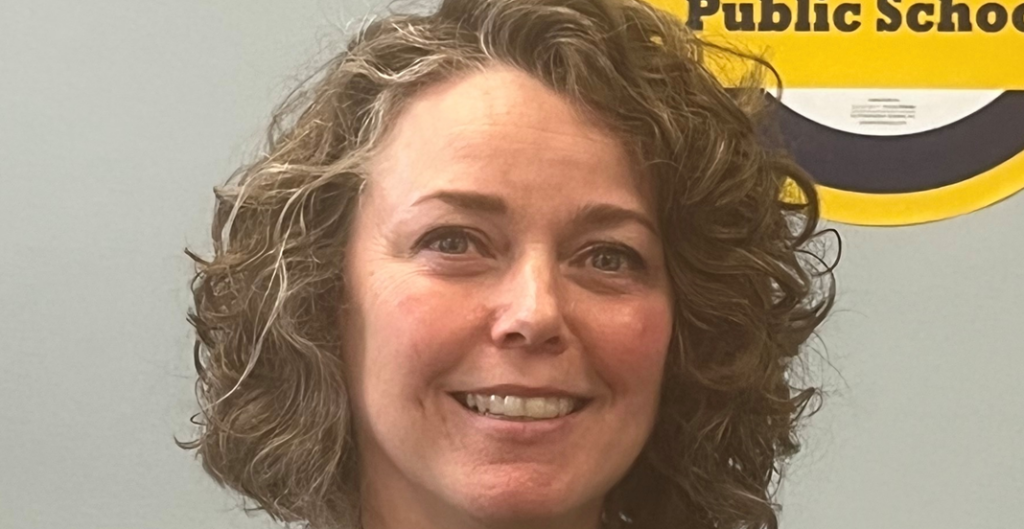
Mikie Sherrill's proposed state budget would increase the district's state aid by $300,000, but that amounts to a Band-Aid, says Jeanne Howe, the superintendent. That increase would lift state aid to the district to about $5.7 million. The district's current budget is $61.2 million.
Enrollment is down - by about 29 percent, or almost 700 students - over the last 10 years. While declining enrollment can adversely impact state aid, Howe says the district's state aid drop has been about 60 percent. So, she says things are out of whack.
It is true that families are having fewer children these days, but Howe says the problem is deeper. She says Highlands restrictions simply inhibit growth.
The Morris County Tax Board tracks assessed value of property. That's critical because property taxes are paid on assessed value.
From 2021 to this year, assessed ratable growth in Jefferson has been about $69 million, according to the county's equalization table.
But in nearby Mount Olive, the similar rate of growth over the same period was about $288 million. In Roxbury, which borders Jefferson, it was about $154 million.
The district wants help from the state.
A number of bills have been proposed in the Legislature to help not only Jefferson, but the whole region.
The most straightforward piece of legislation would award the Jefferson district $4.8 million in supplemental aid.
Bill sponsor Aura Dunn, R-25 says it's a matter of fairness.
“We can both protect our natural resources and the education of our Highlands students through thoughtful legislation such as the bills I’ve proposed,” Dunn said in a release. “Their unique situation calls for decisive action.” Dunn's district includes Jefferson and other parts of the Highlands region.
The political reality here is that most lawmakers from the Highlands region are Republicans. How much genuine leverage do they have in a state controlled - and very much so - by Democrats?
Enter Marisa Sweeney, a Democrat from LD-25, who won election to the Assembly last fall.
In a recent conversation, Sweeney called aid to Jefferson and other towns facing a similar plight her biggest priority.
She says she has talked to Ben Spinelli, the executive director of the Highlands Council, and such environmental leaders as Jeff Tittel, the former director of the NJ chapter of the Sierra Club, in hopes of finding a solution.
With no help from the state, Howe says drastic action will be taken in addition to what has already been done such as the recent closing of two schools. The district has three elementary schools, an intermediate school and a high school.
It also has created a website to highlight the problem - Falcons 4 Fair Funding.
It speaks of such drastic possibilities as decimating the arts curriculum, cutting many athletic programs and eliminating courtesy busing, which is the unrequired transportation of students living within two miles of school.
By any objective look, a district needs art and music programs and varied sports teams to be viable.
Walking to school may be the stuff of ancient lore, but Jefferson is a place with no sidewalks and narrow roads. Walking ain't easy. Busing seems essential.
Consolidating programs and curriculum with neighboring districts may seem viable on the surface, but not really. Jefferson is 42 square miles. That would make any student trips to neighboring schools for academic or athletic programs quite the excursion.
Howe, the super, is retiring at the end of this school year. The fiscal uncertainty here may not make the superintendent's job look all that coveted. Howe doesn't see it that way.
She has been with the district for more than two decades and speaks about the town's beauty and natural attractions.
It borders Lake Hopatcong, the state's largest lake, and also boasts a highly regarded county golf course (Berkshire Valley) and a large county park, the Mahlon Dickerson Reservation.
Still, Howe is unequivocal about the district's money woes.
"We need help soon."